
13 KiB
xtc — the complete screenshot gallery
Browse every screenshot, from arranging and editing to mixing, plugins and workspace preferences. See capture notes and reproduction instructions for image provenance and workflow limits.
The xtc workspace at a glance
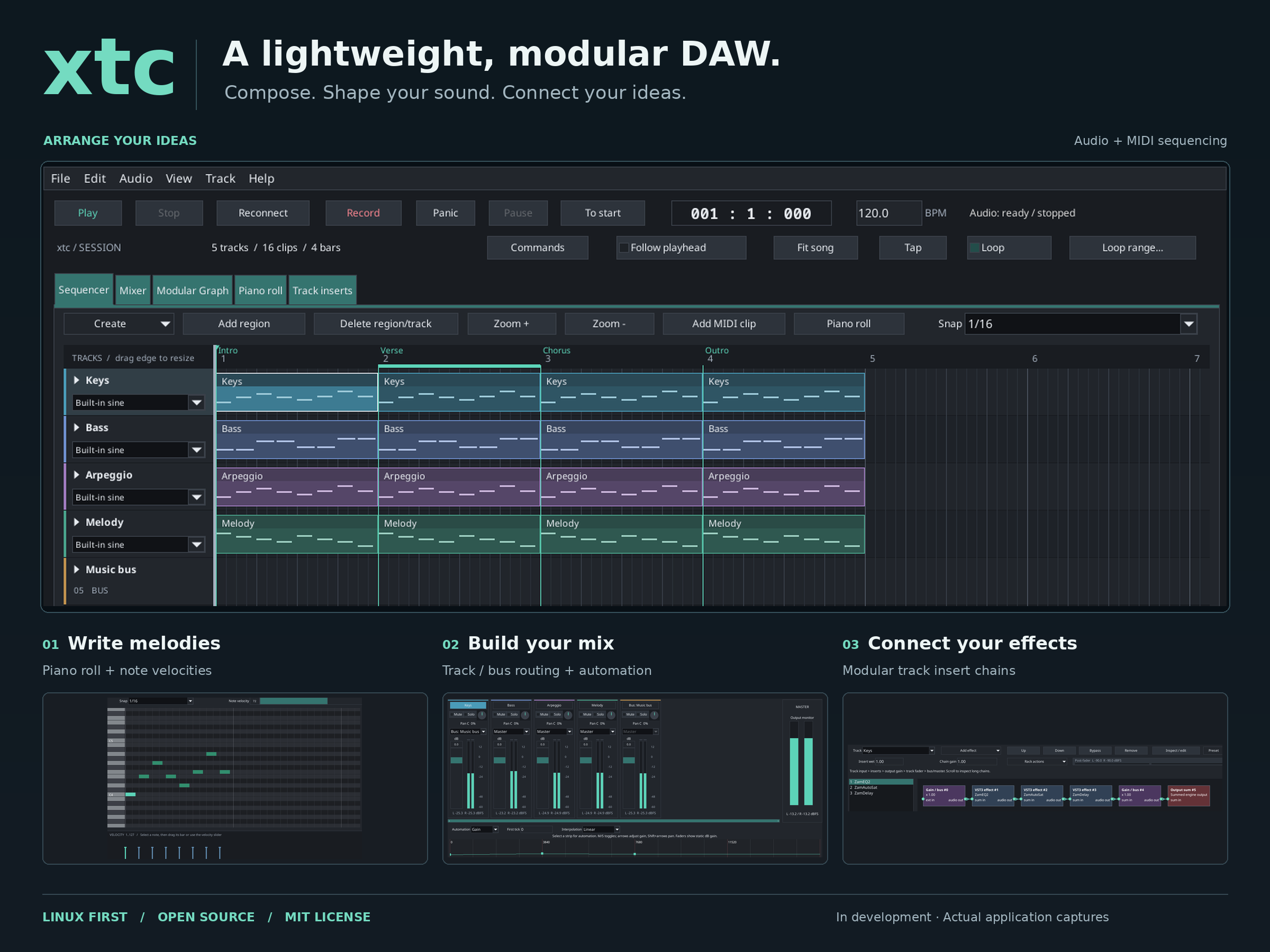
A promotional composite of the arrangement, piano roll, mixer and track insert views.
A compact workspace for composition
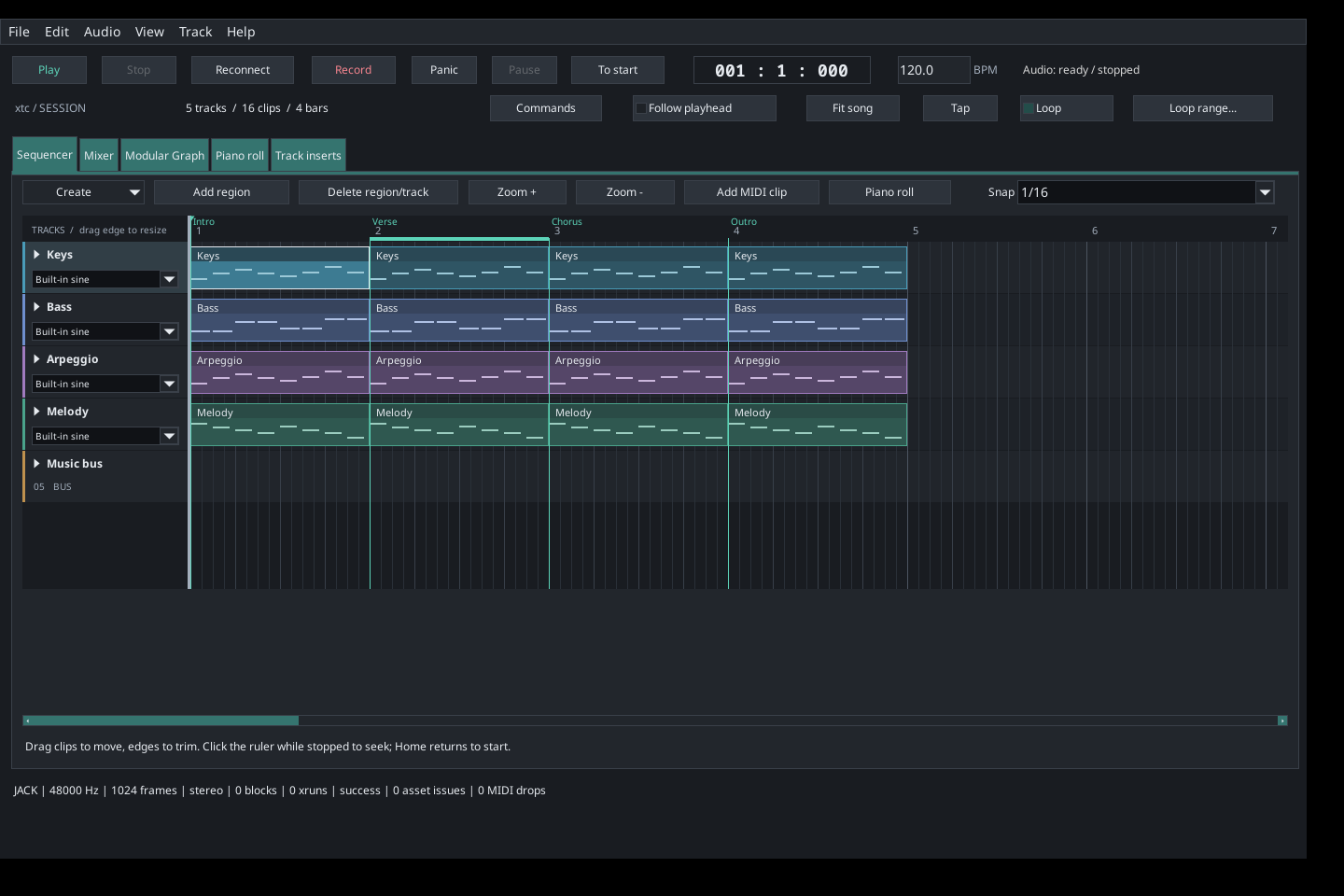
The sequencer brings track creation, arrangement tools and transport controls into one view.
Arrange clips around a loop
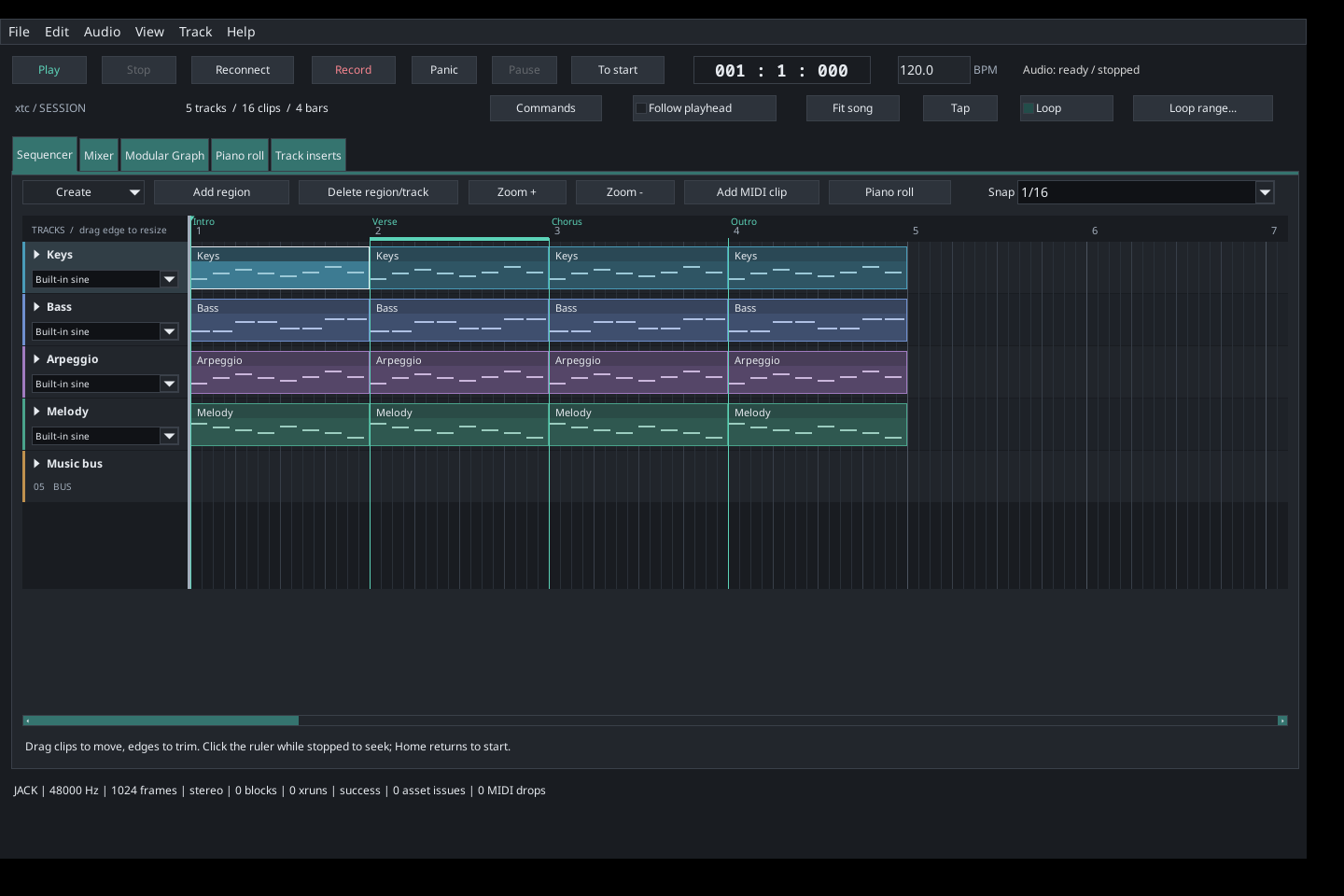
MIDI clips sit beneath section markers and a highlighted loop range.
Edit velocity beneath each track
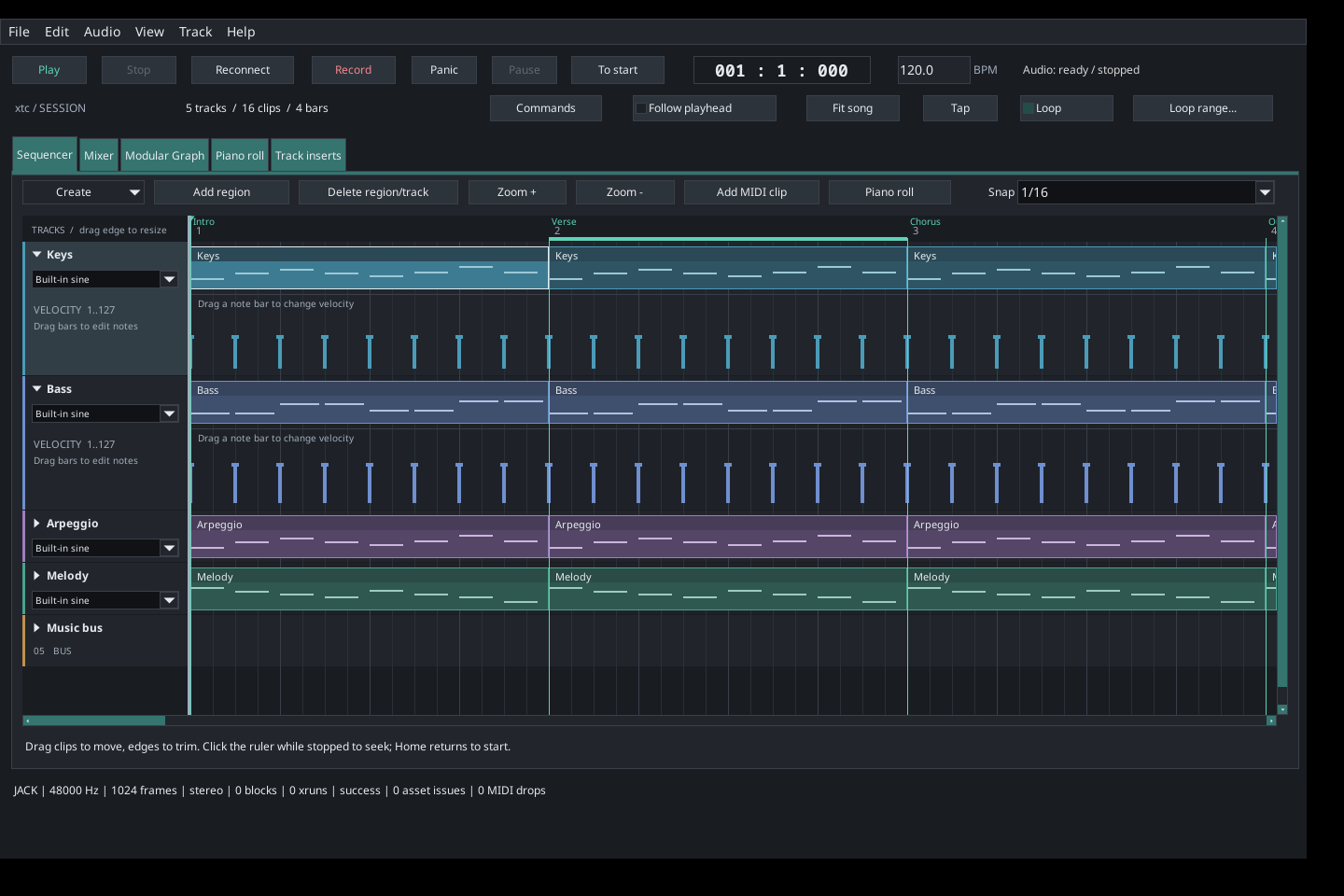
Keys and Bass expand downward to reveal MIDI velocity bars while following tracks move down.
Shape audio velocity at any point
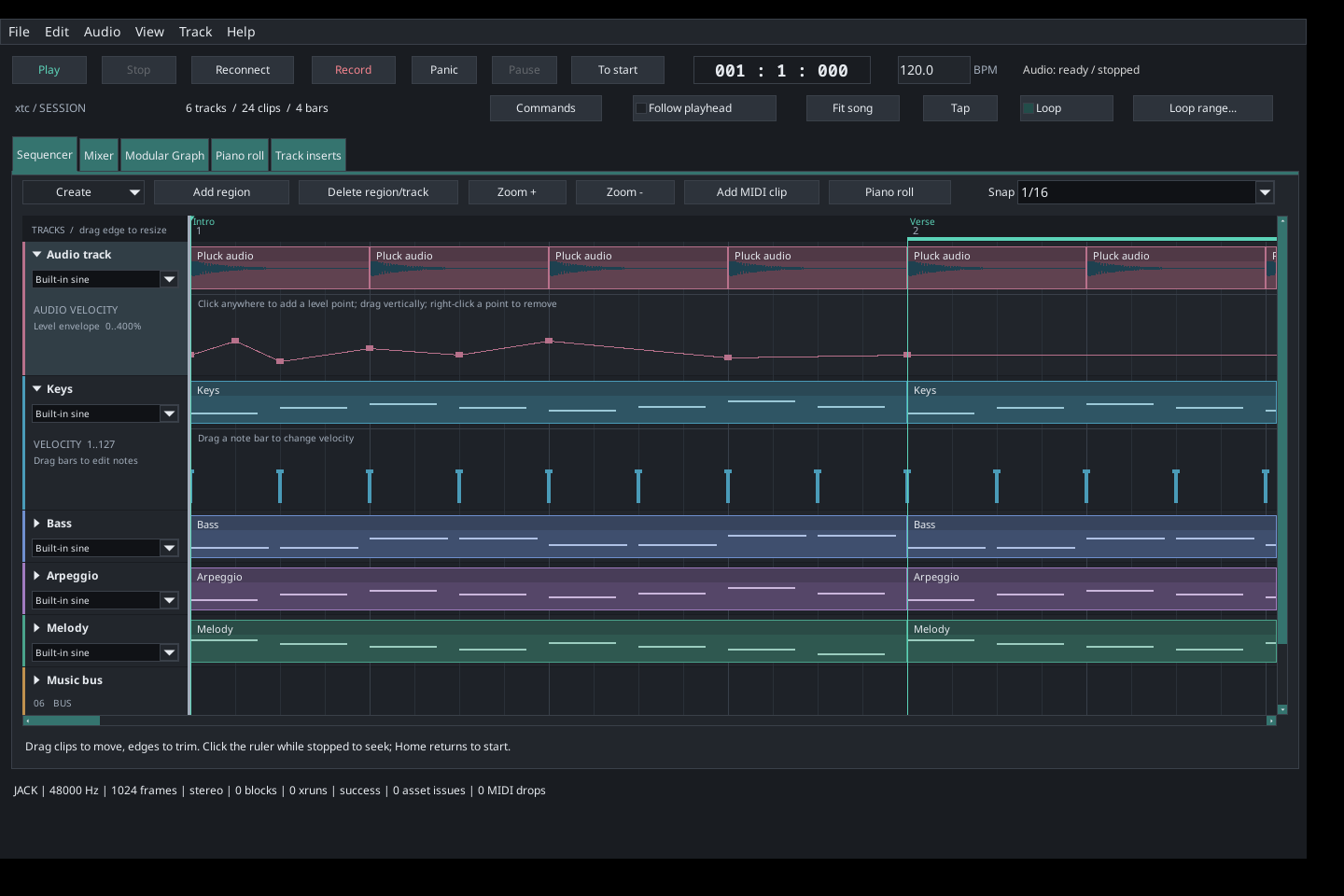
The audio track exposes a continuous level envelope with editable gain points at arbitrary timeline positions. The Keys track below retains its MIDI note velocity bars.
Preview an audio level adjustment

Dragging a point vertically previews the new envelope and displays its level in the track header. Release to commit the edit or press Escape to cancel.
Start a new track
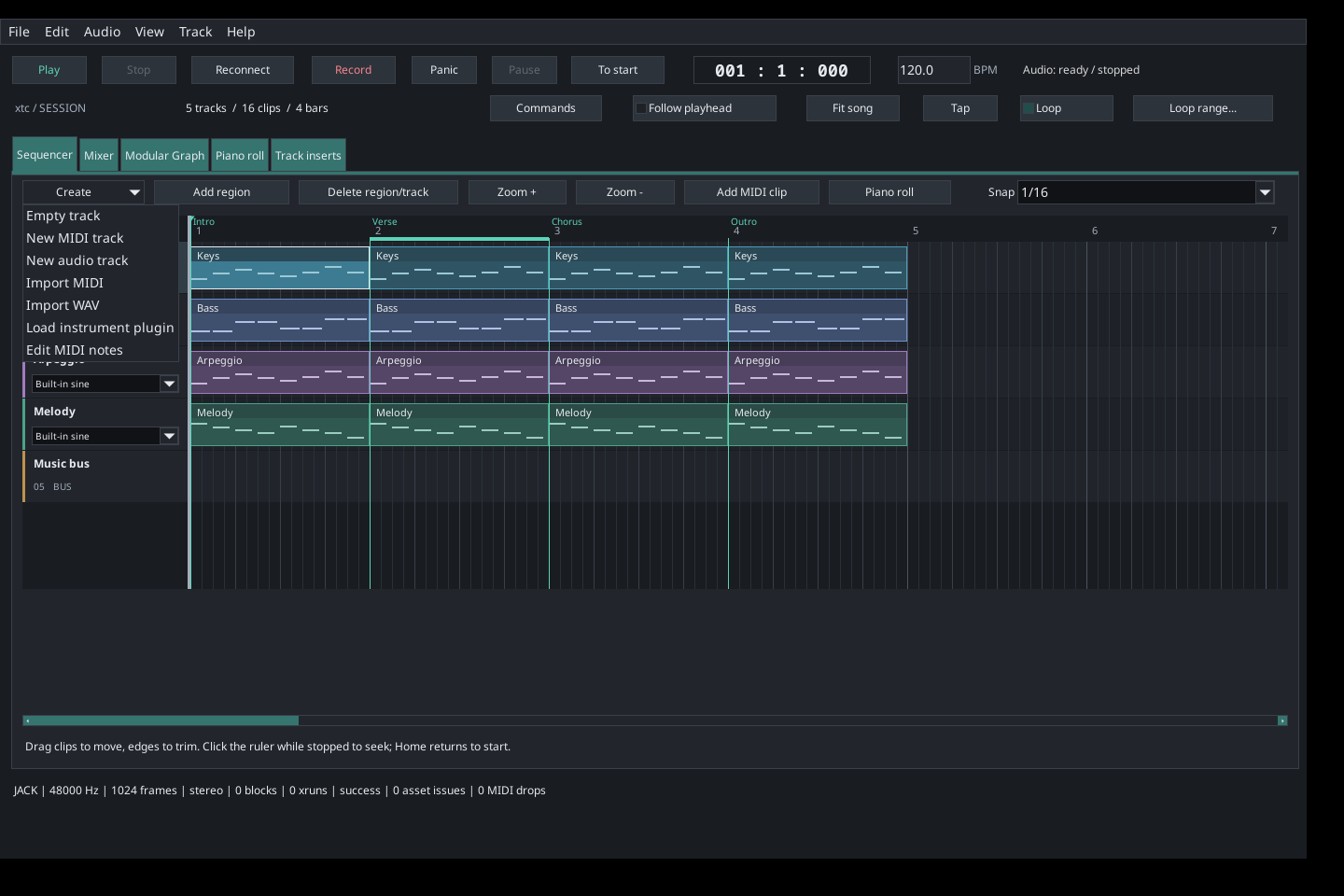
The Create dropdown opens over the arrangement with track creation choices.
Give the song a structure

Named Intro, Verse, Chorus and Outro markers identify sections along the ruler.
Name an arrangement marker
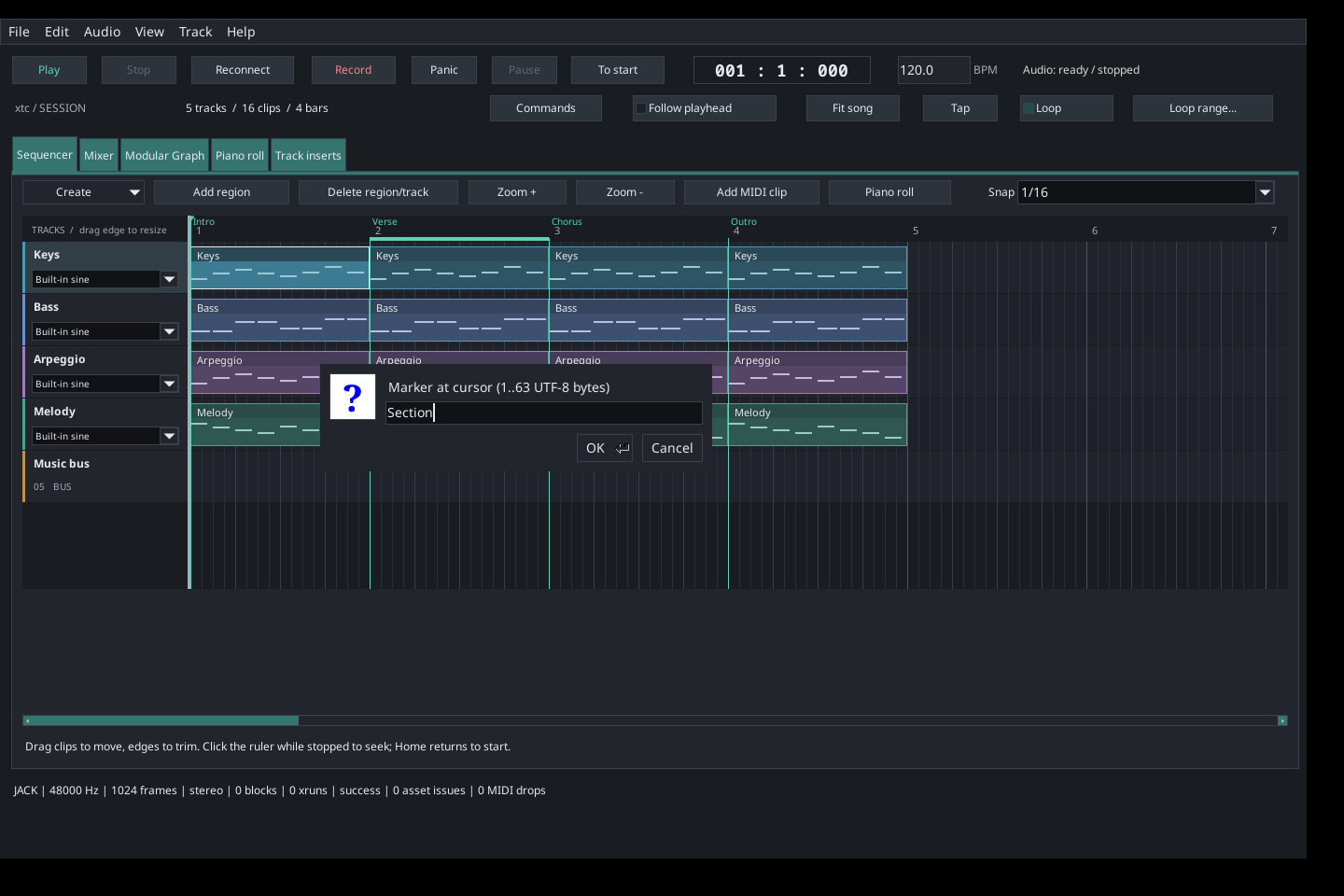
The marker editor provides a name for a position in the song.
Navigate song sections
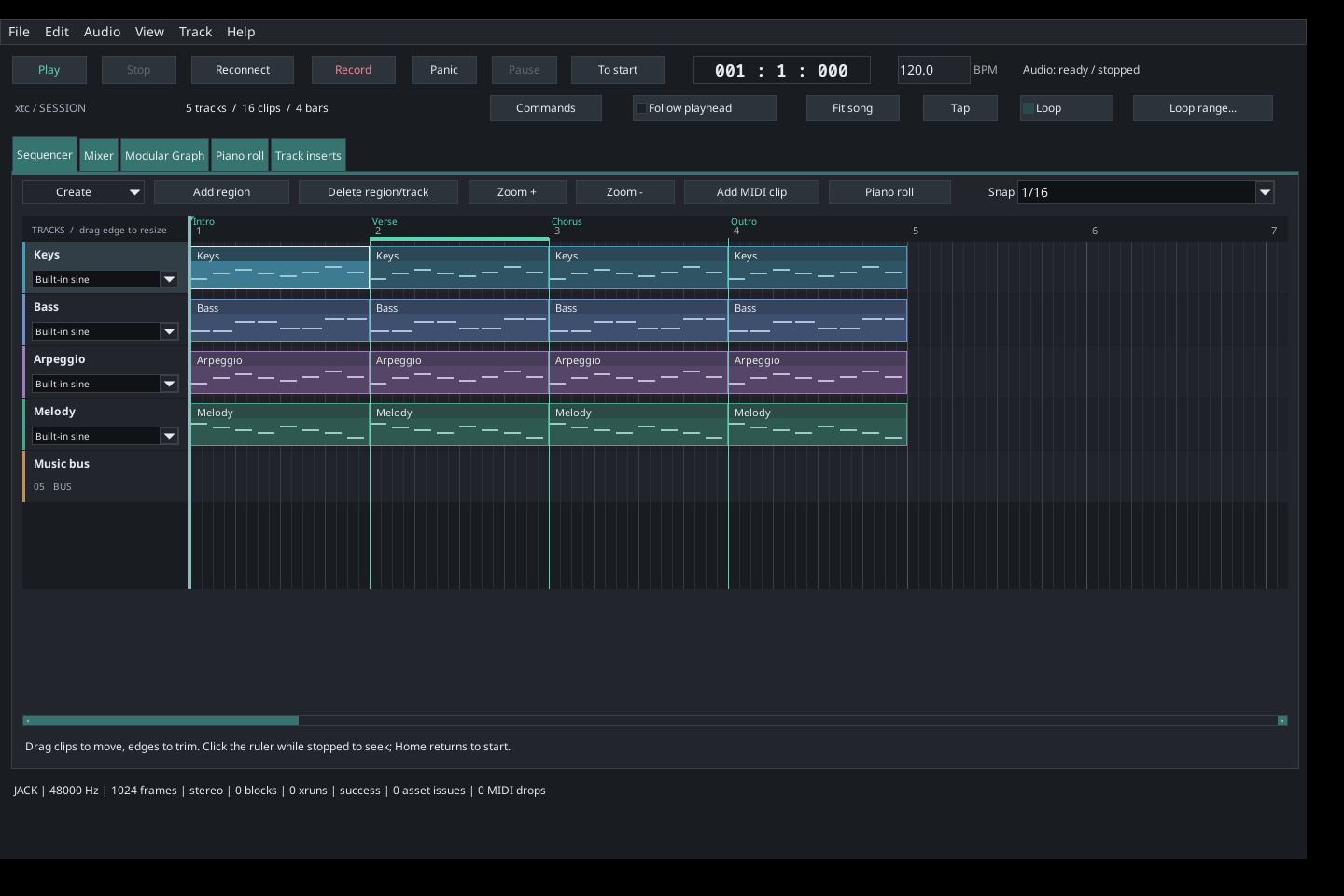
The arrangement shows a loop around the current song section.
Set the loop boundaries
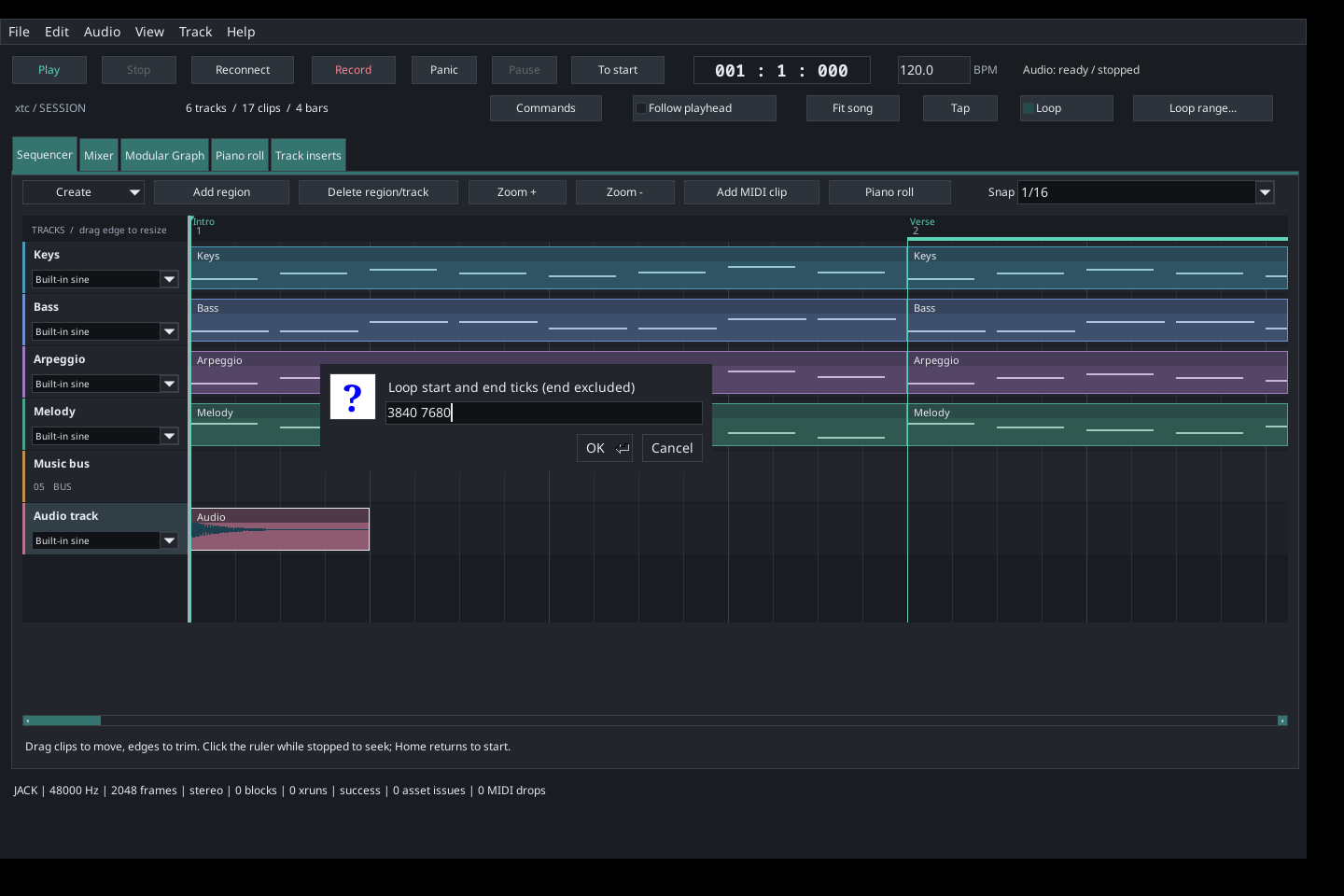
The loop range dialog controls the start and end of repeated playback.
Make room in the arrangement
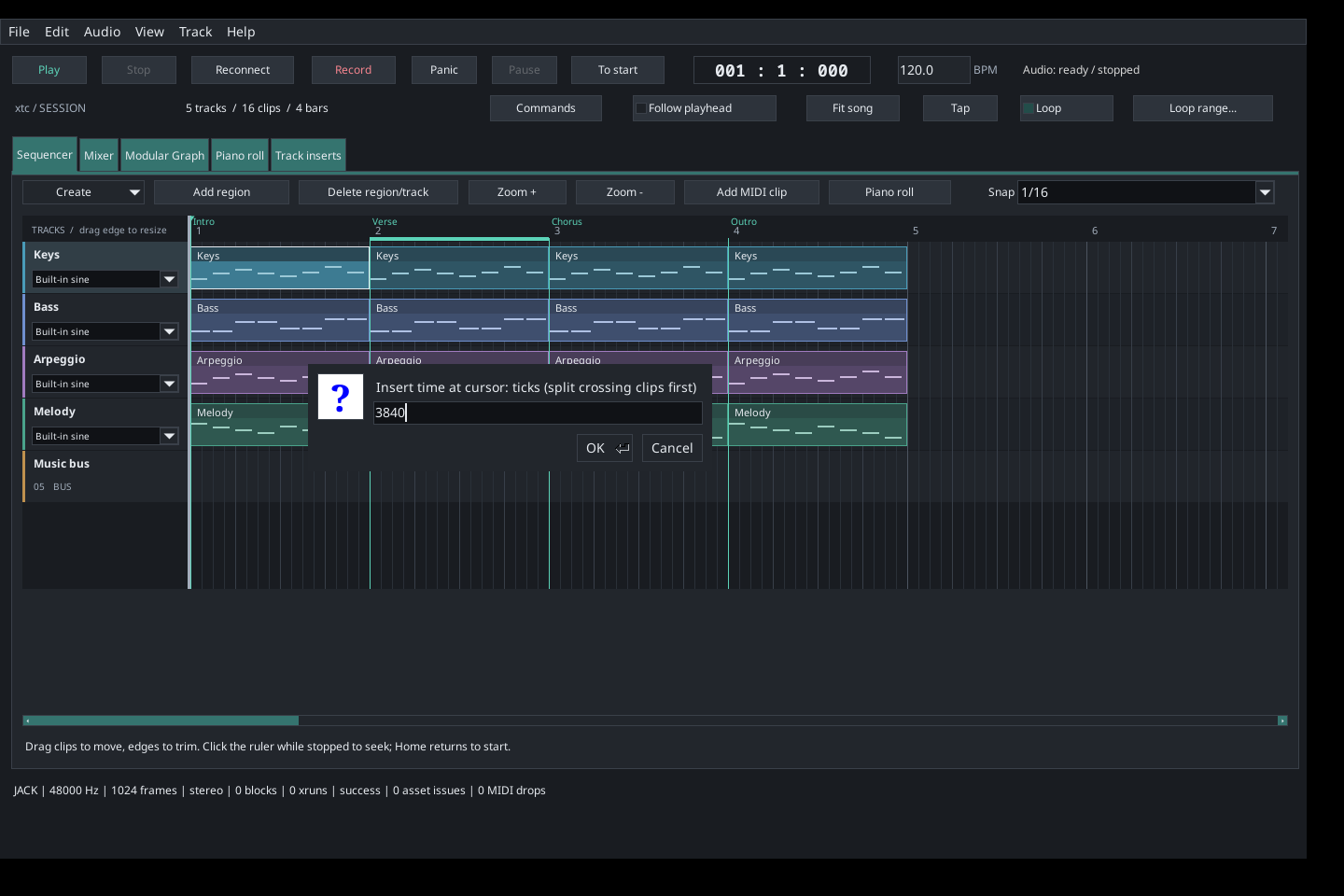
The ripple time dialog requests a duration to insert or remove at the cursor.
See the inserted space
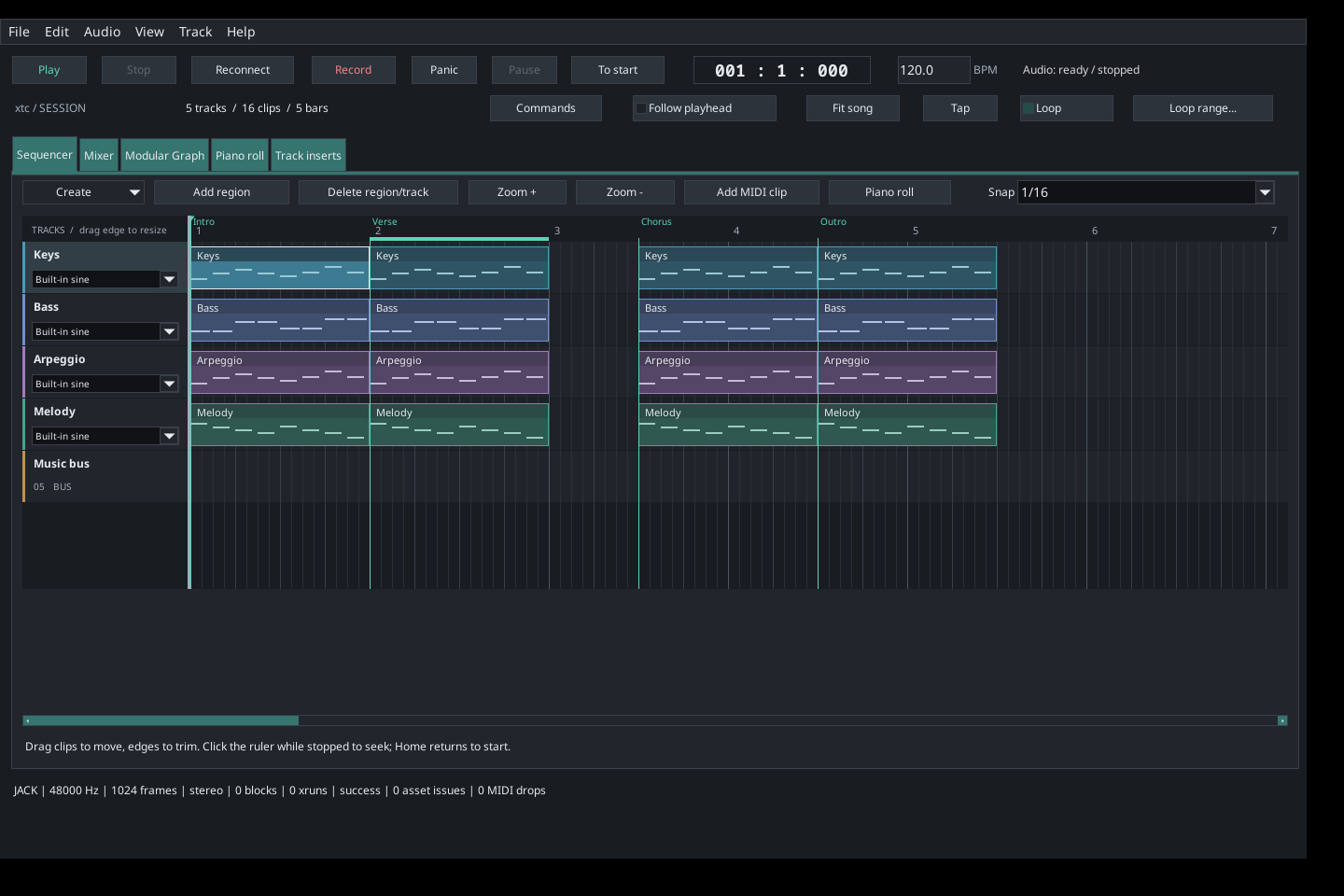
The arrangement shows the gap created by inserting time.
Build an independent track layer
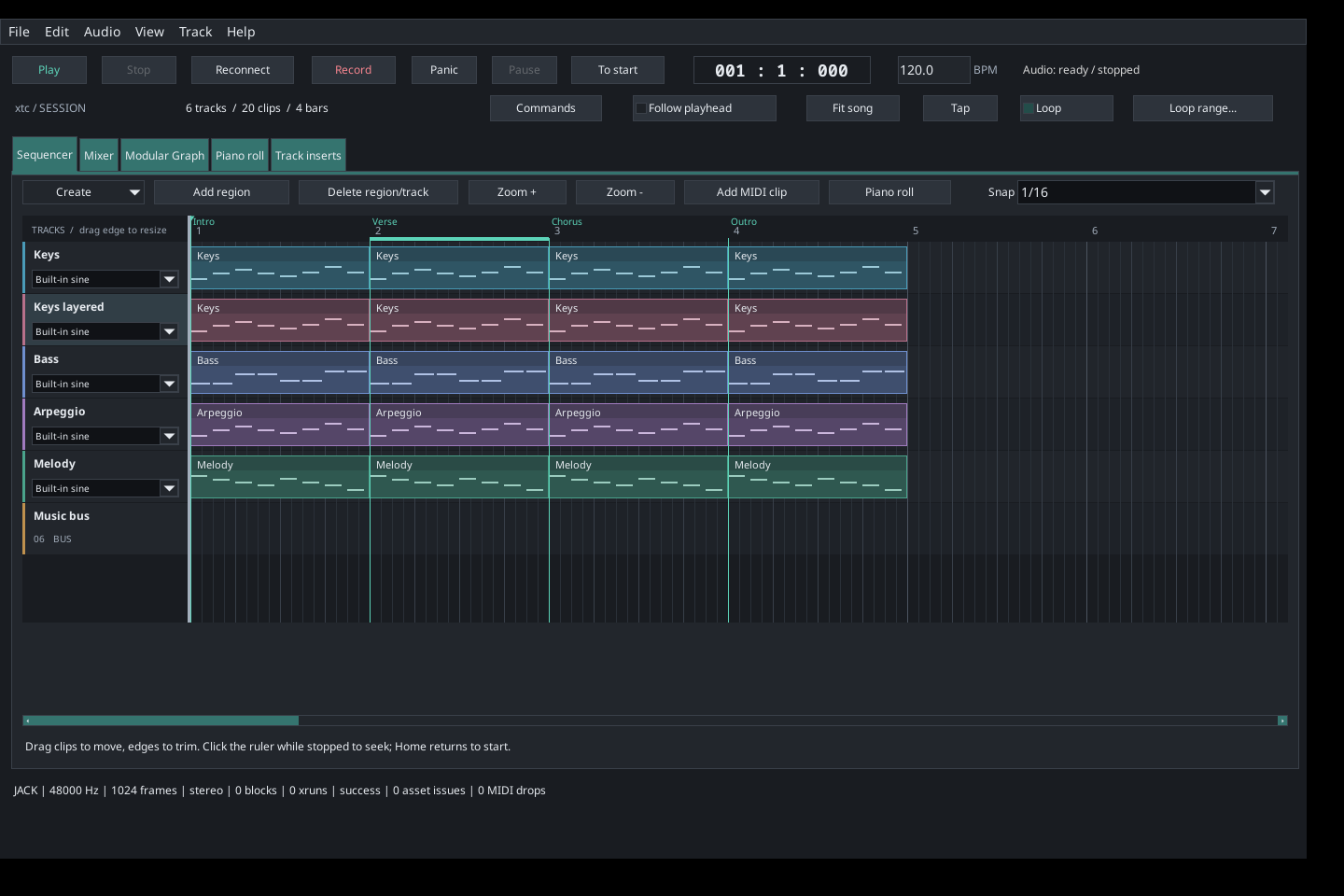
A duplicated track appears alongside the original arrangement.
Split a MIDI clip
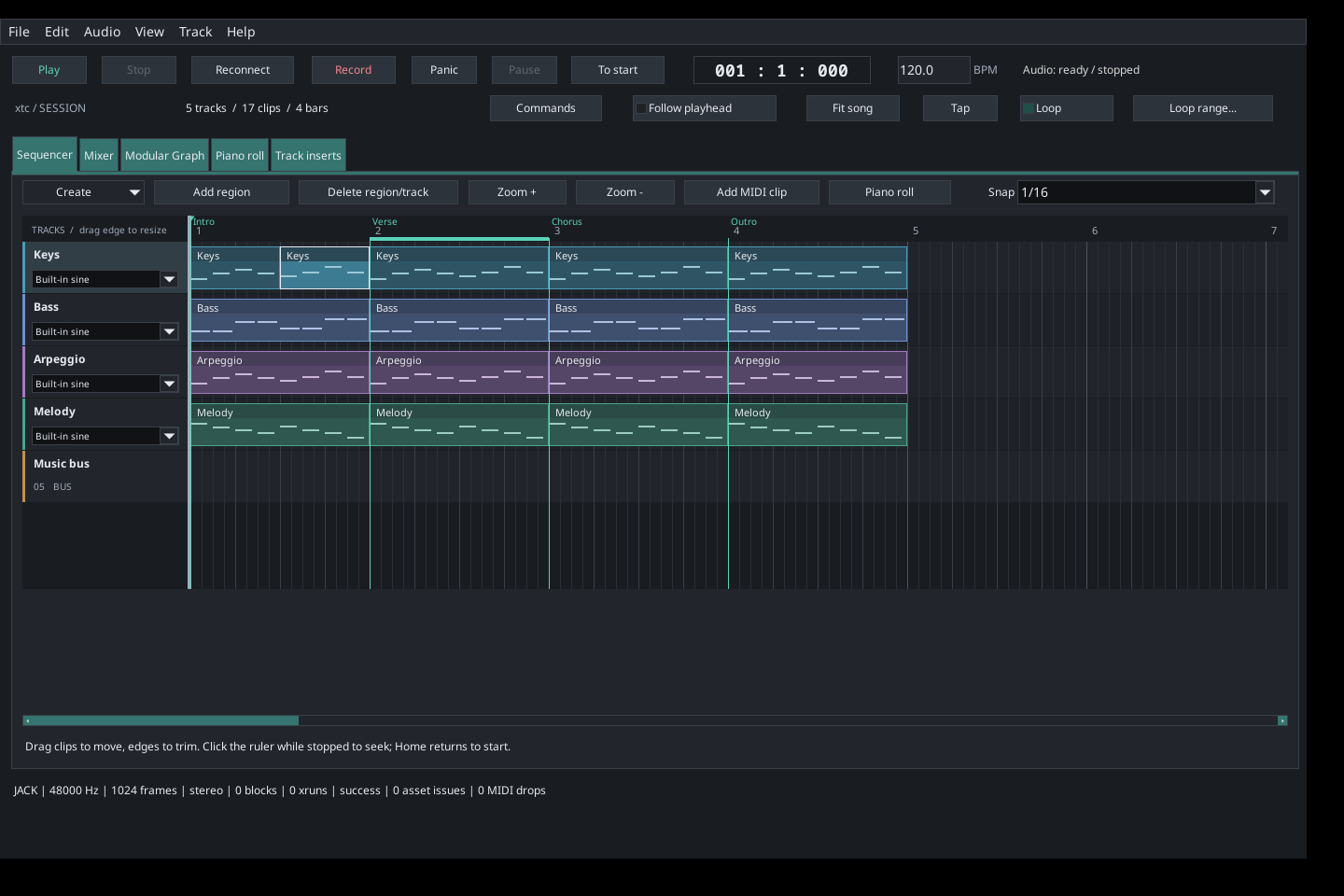
The arrangement displays separate MIDI regions after a nondestructive split.
Bring MIDI regions together

Separate MIDI material is consolidated into a single clip.
Shape notes and their dynamics

The piano roll combines note editing with a dedicated velocity lane.
Add timing and velocity variation
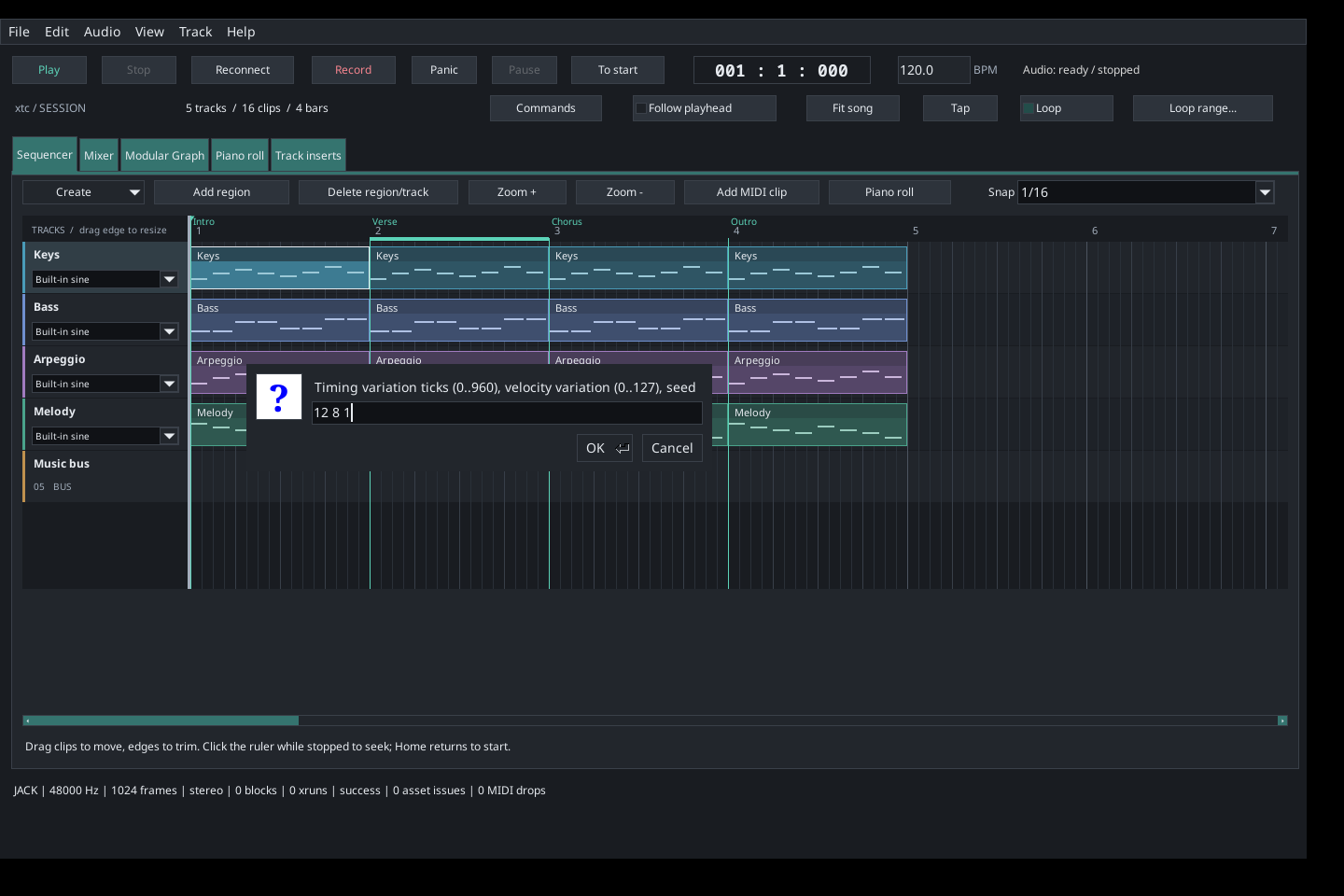
The humanization dialog exposes timing variation, velocity variation and a repeatable seed.
Build chords from intervals
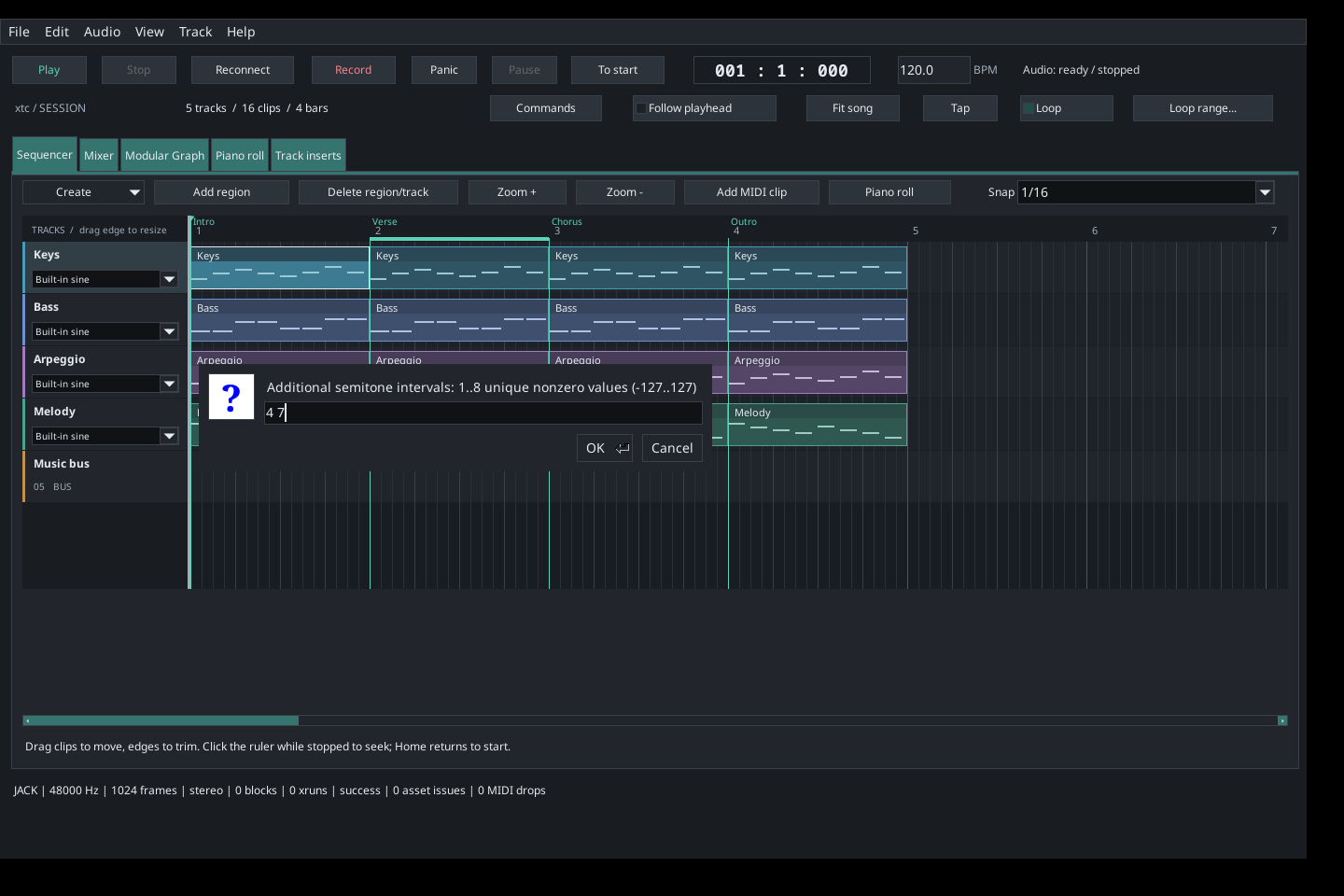
The chord dialog accepts intervals for constructing notes around a root.
Review the generated chords

The piano roll displays the notes written by the chord builder.
Turn chords into patterns

The arpeggio dialog controls step duration, gate and note direction.
Review an arpeggiated pattern

The piano roll shows the sequence of notes produced by arpeggiation.
Spread chord notes in time
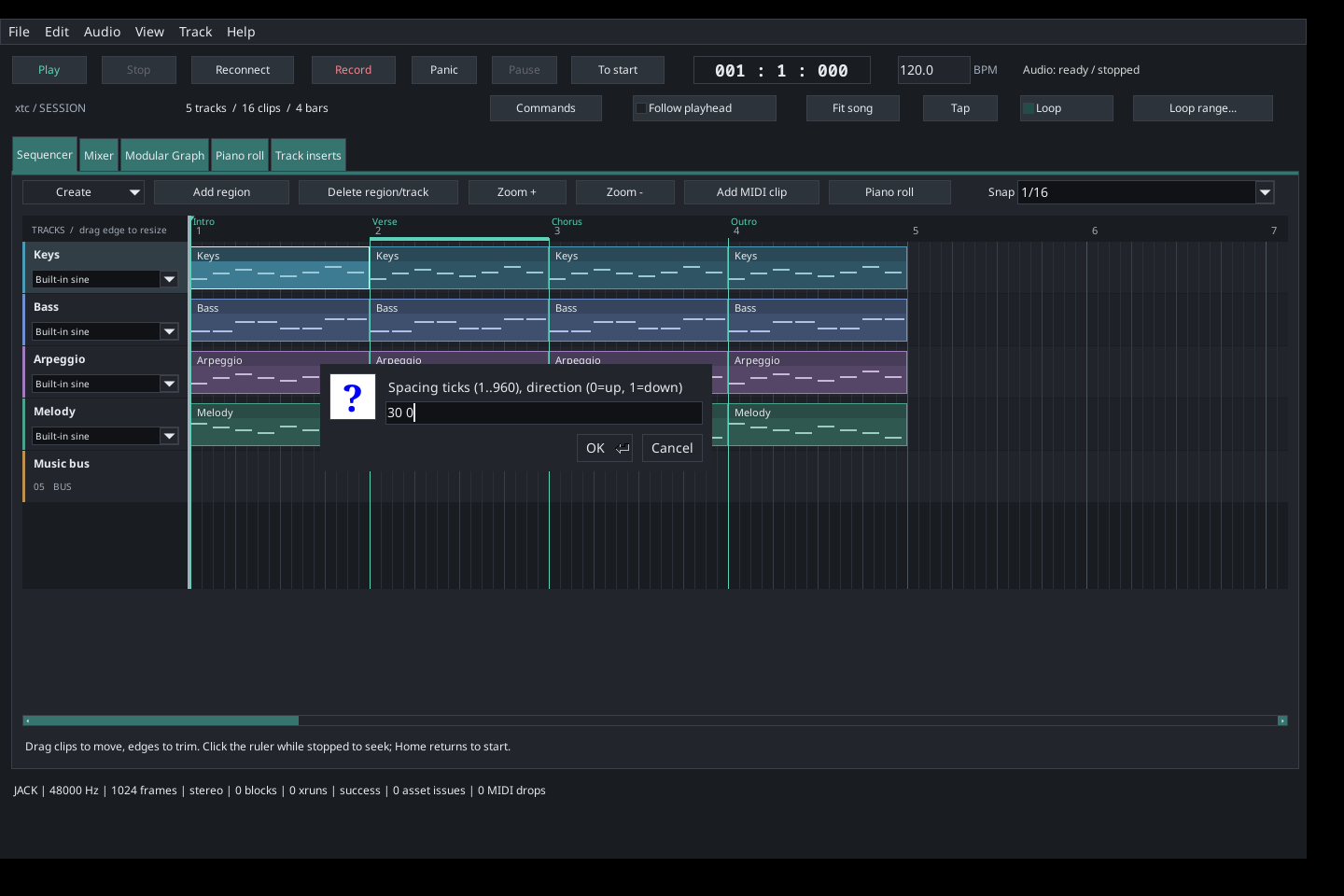
The strumming dialog configures spacing and direction for chord notes.
Review a strummed chord
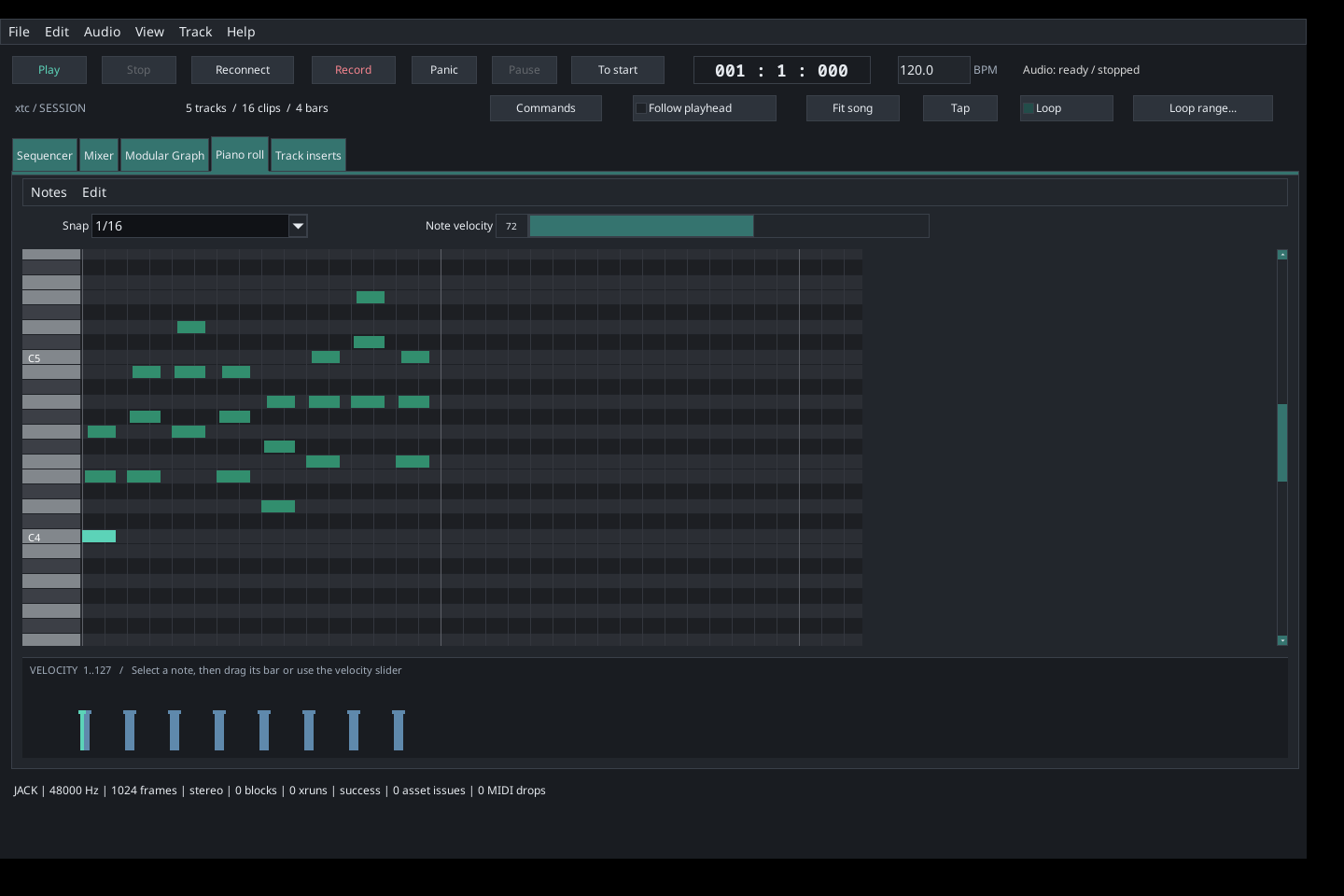
The piano roll shows staggered note starts after applying chord strumming.
Exchange standard MIDI files
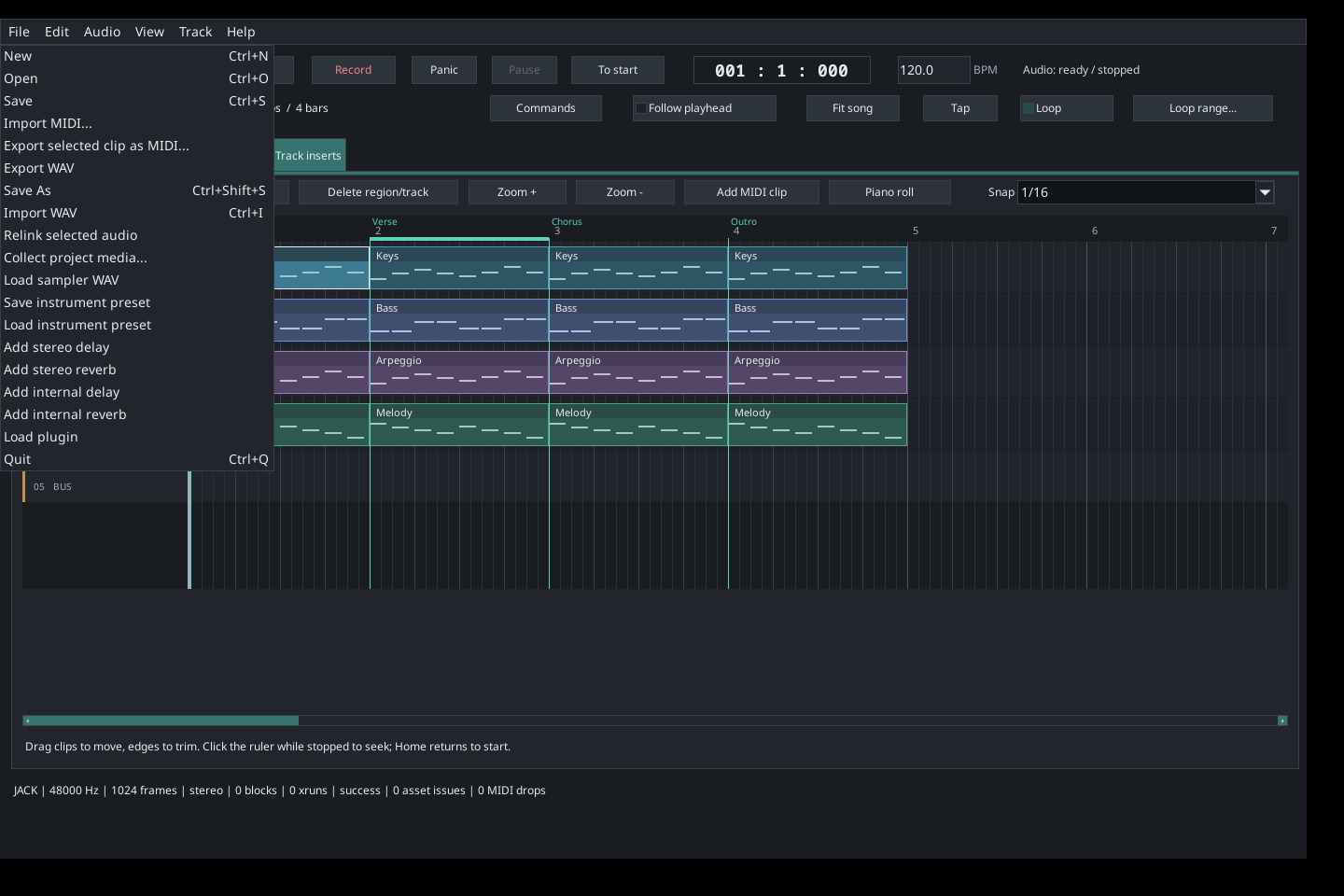
The File menu exposes MIDI import and selected-clip export commands.
Bring MIDI into the song

An exported MIDI clip has been imported into the arrangement.
Inspect imported MIDI notes

The piano roll displays imported notes and their velocities.
Arrange audio alongside MIDI
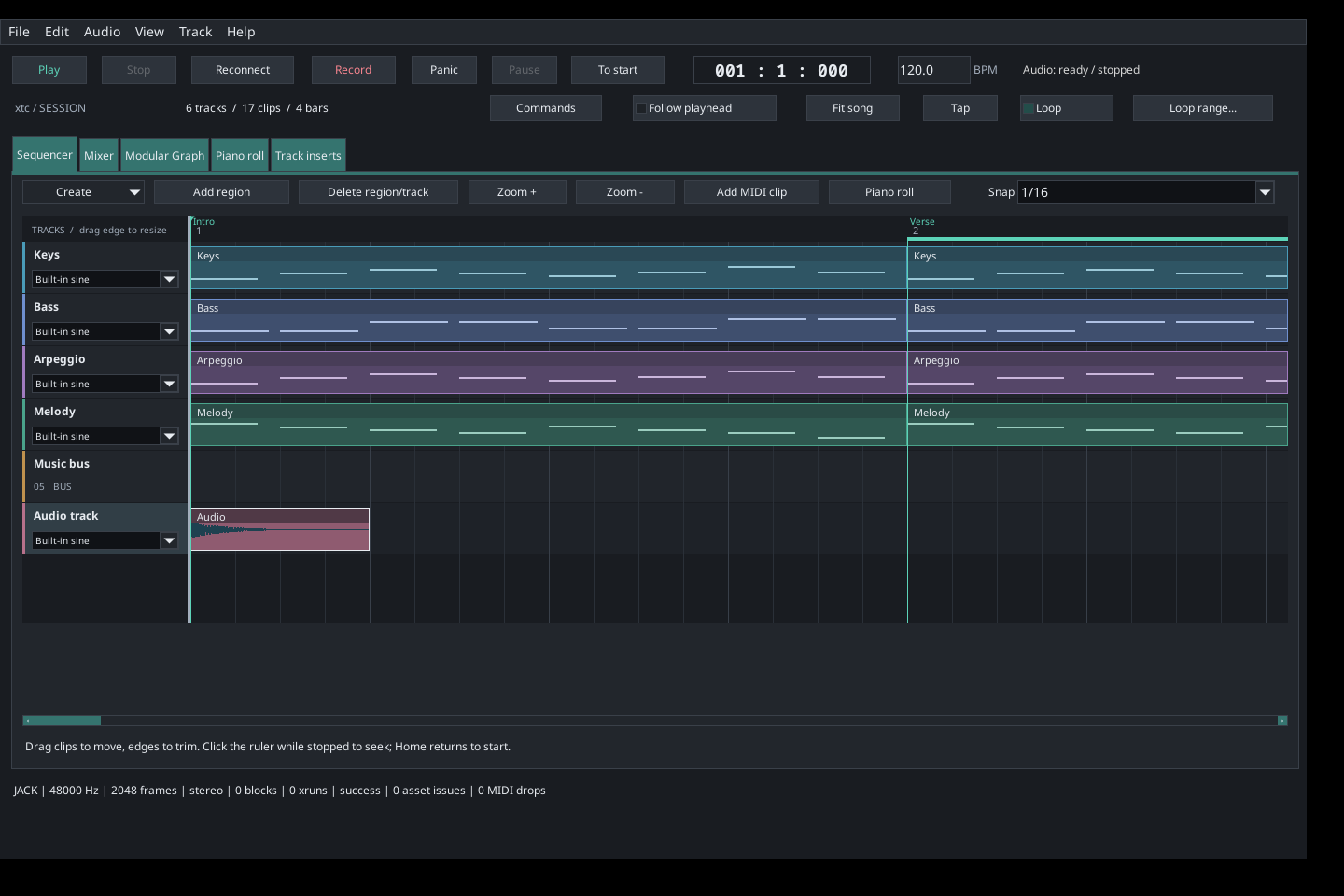
An imported audio clip displays its waveform directly in the sequencer.
Adjust clip gain and fades

The audio clip properties dialog exposes nondestructive gain and fade settings.
Choose a normalization target
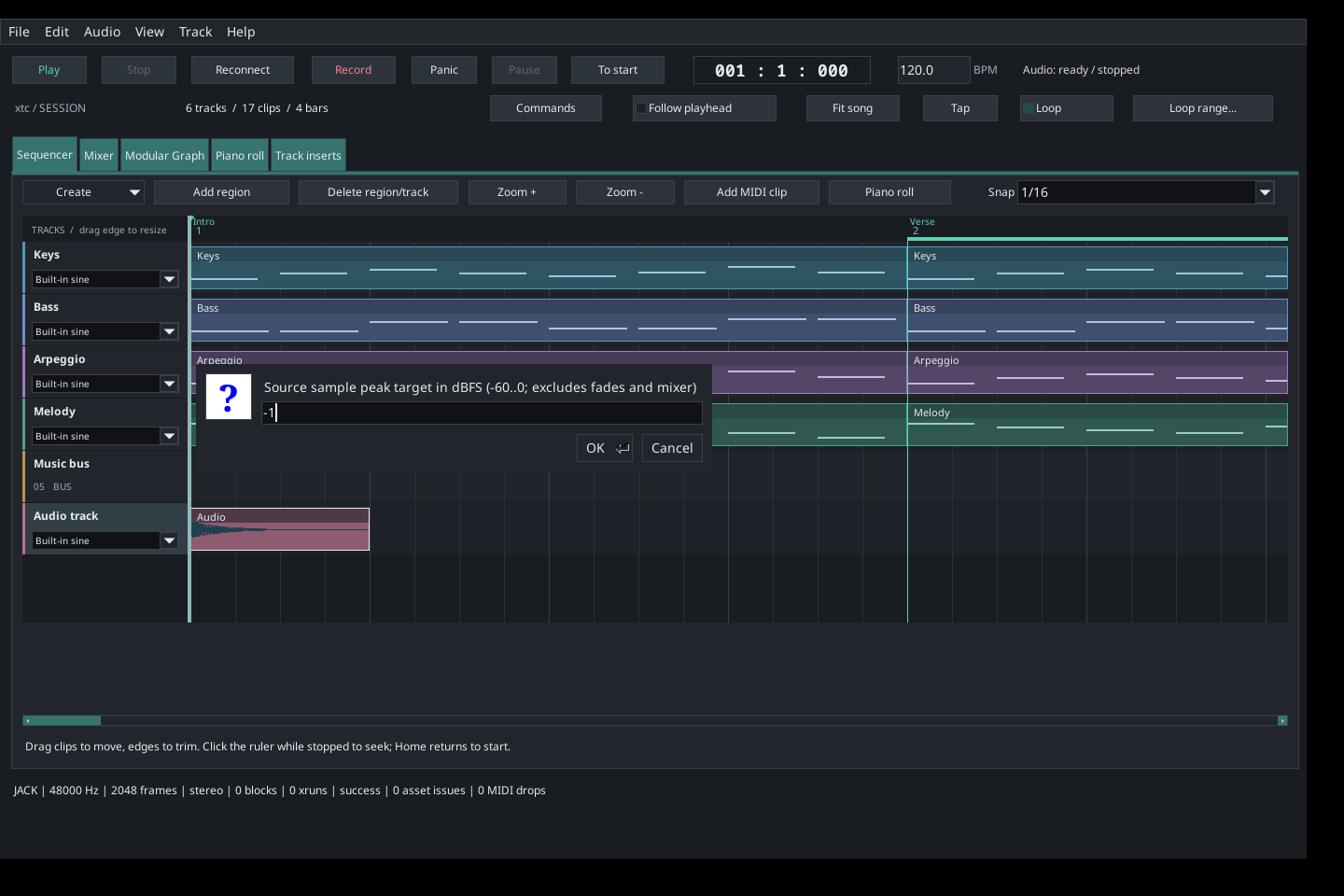
The normalization dialog requests a target peak level in dBFS.
Review normalized audio
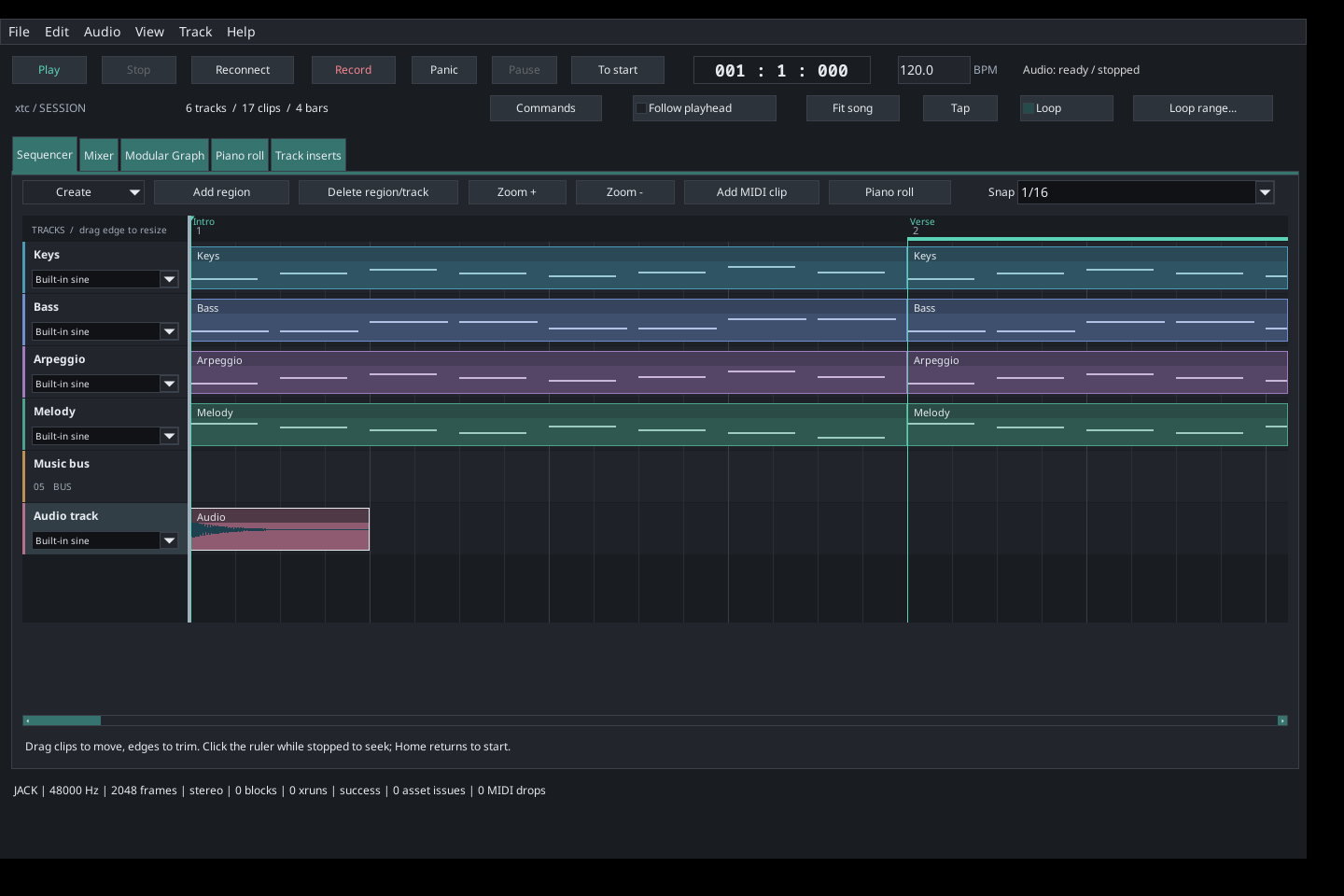
The arrangement shows the audio clip after normalization.
Work directly with an audio source
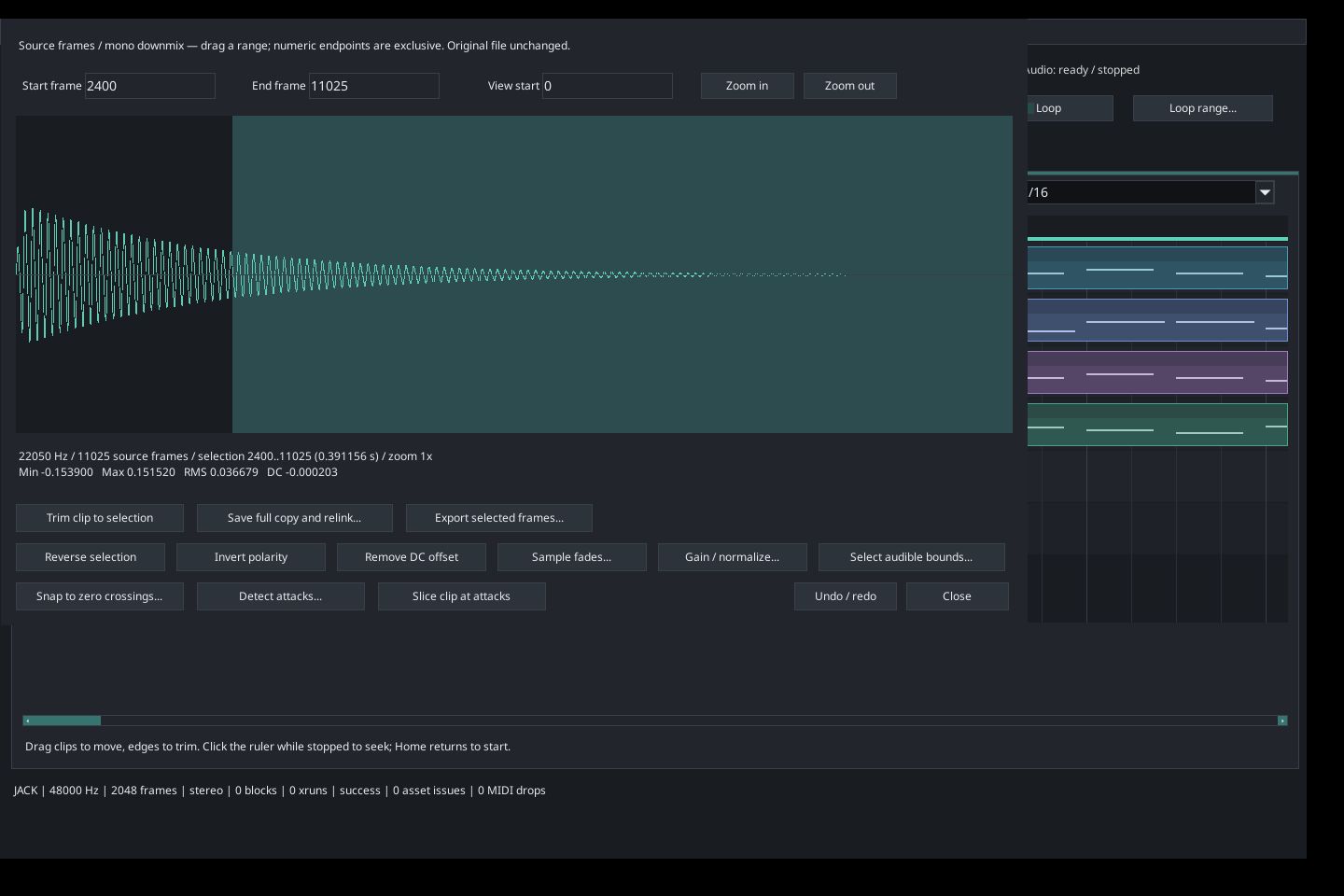
The sample editor displays waveform selection, statistics and processing controls.
Find attacks for slicing
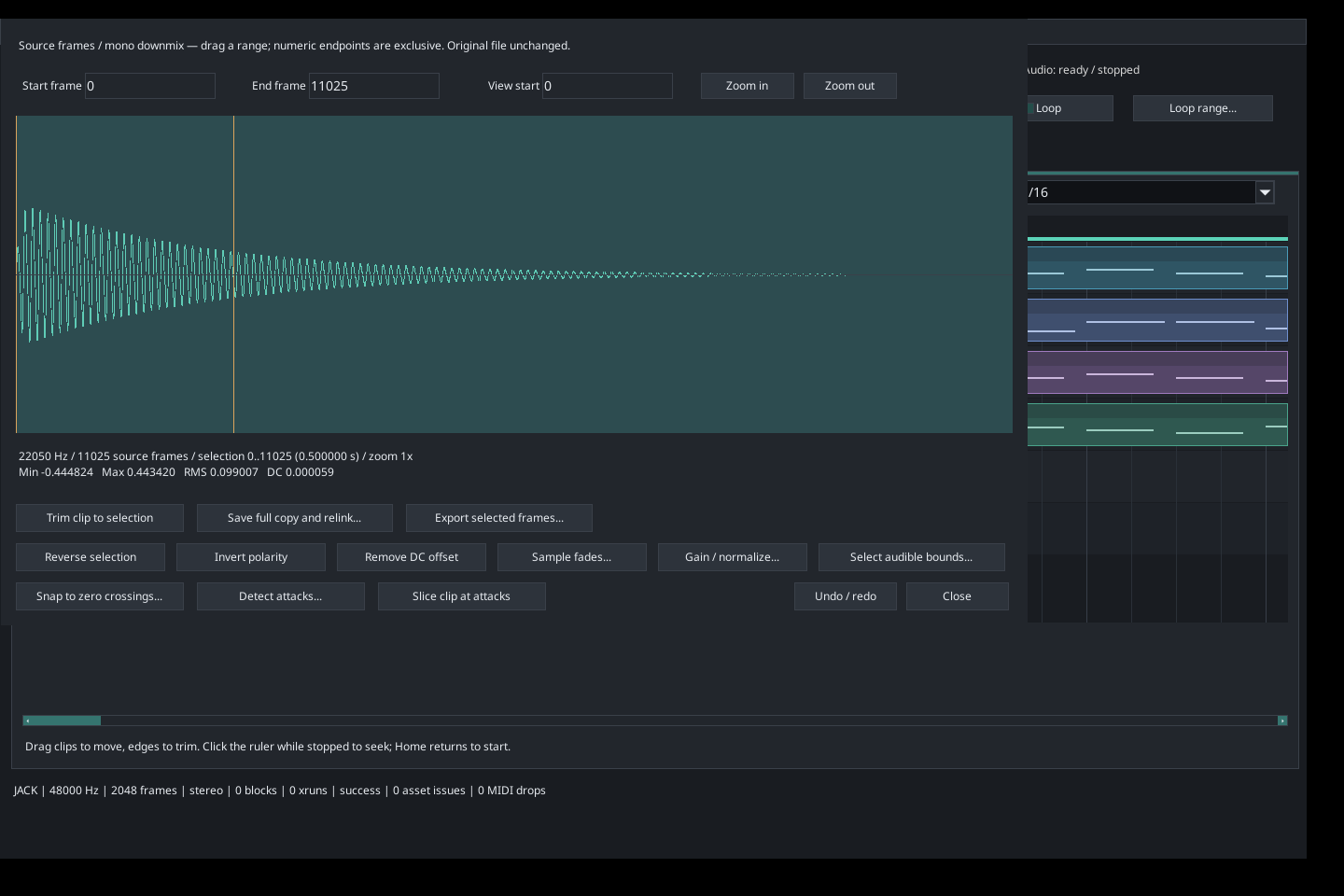
Detected source attacks appear alongside the sample editor's slicing controls.
Collect portable project media
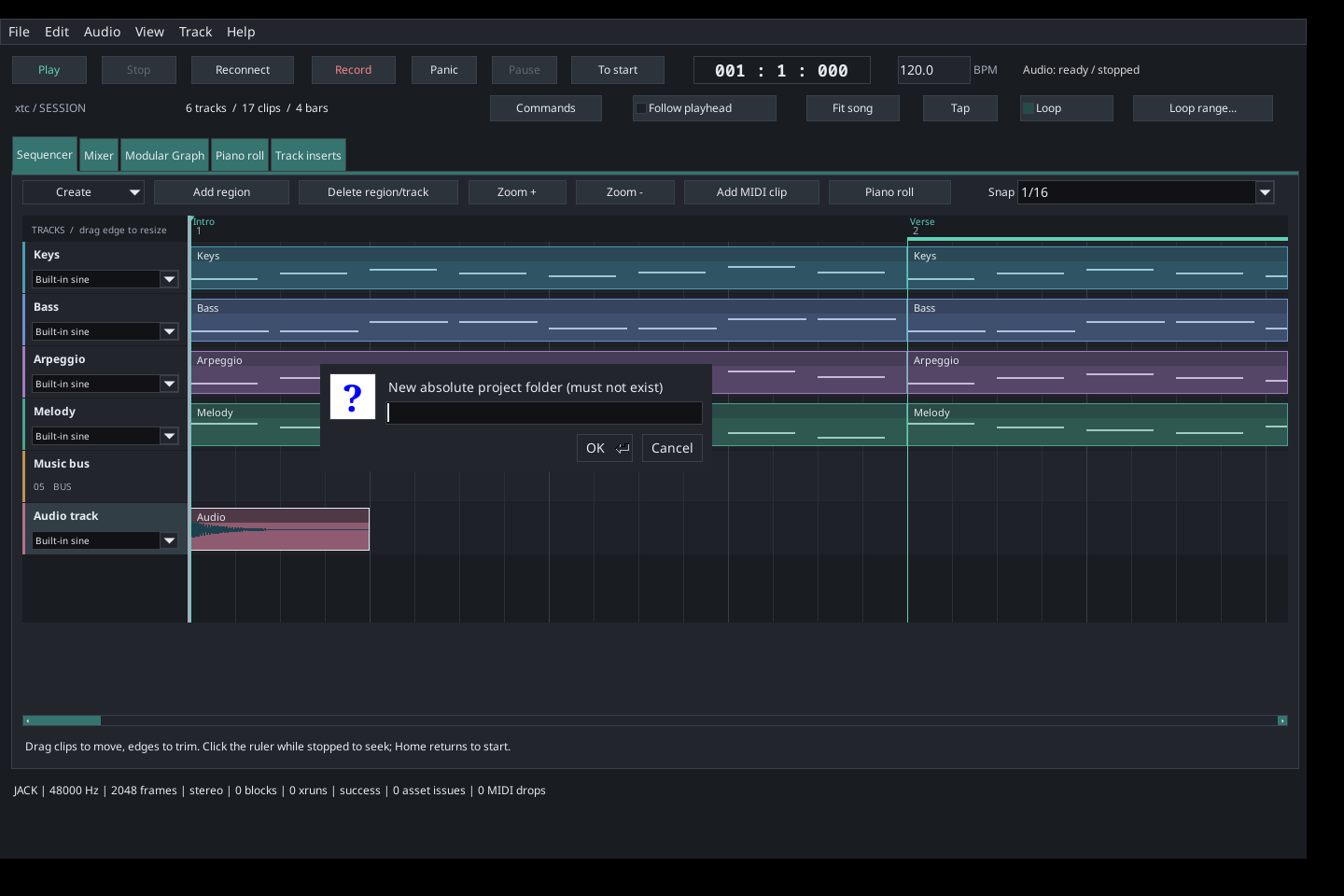
The collection prompt requests a destination folder for the project and its media.
Monitor the mix during playback
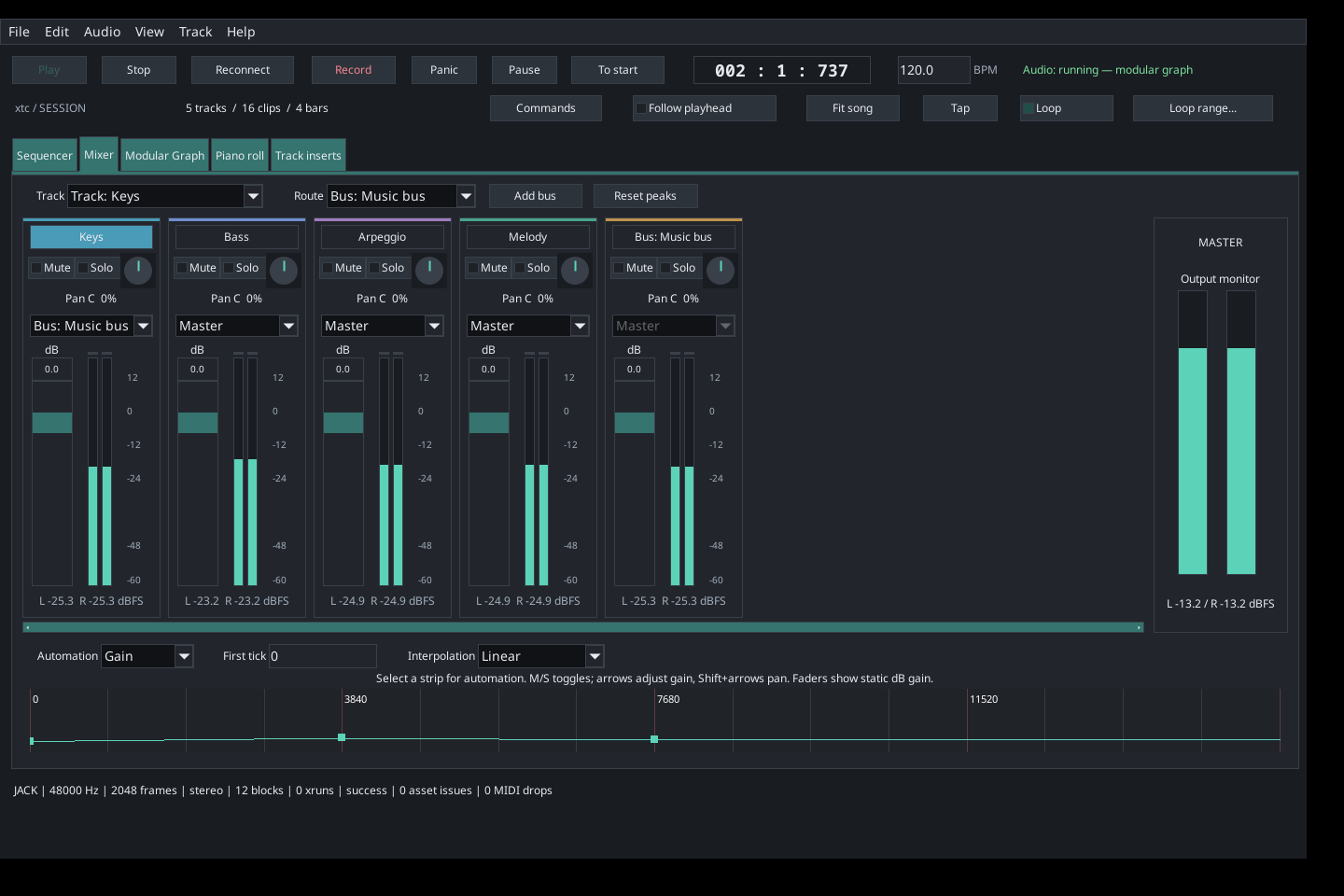
The mixer shows track controls and meters driven by actual JACK playback callbacks.
Shape the mix over time

The mixer presents track controls together with automation editing.
Mix in a smaller window
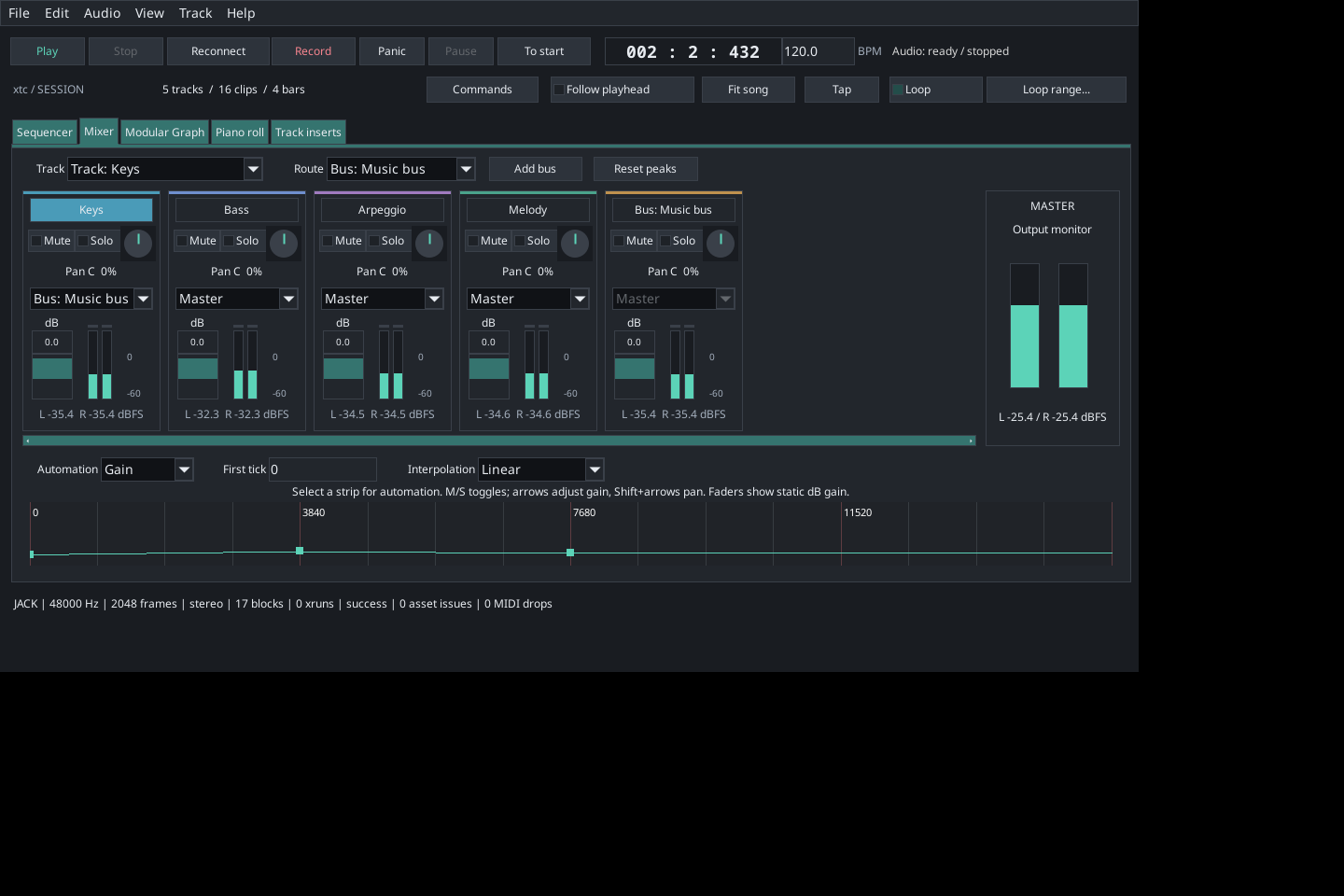
The mixer is shown at the supported 1220 × 720 minimum main-window size.
Navigate a larger session
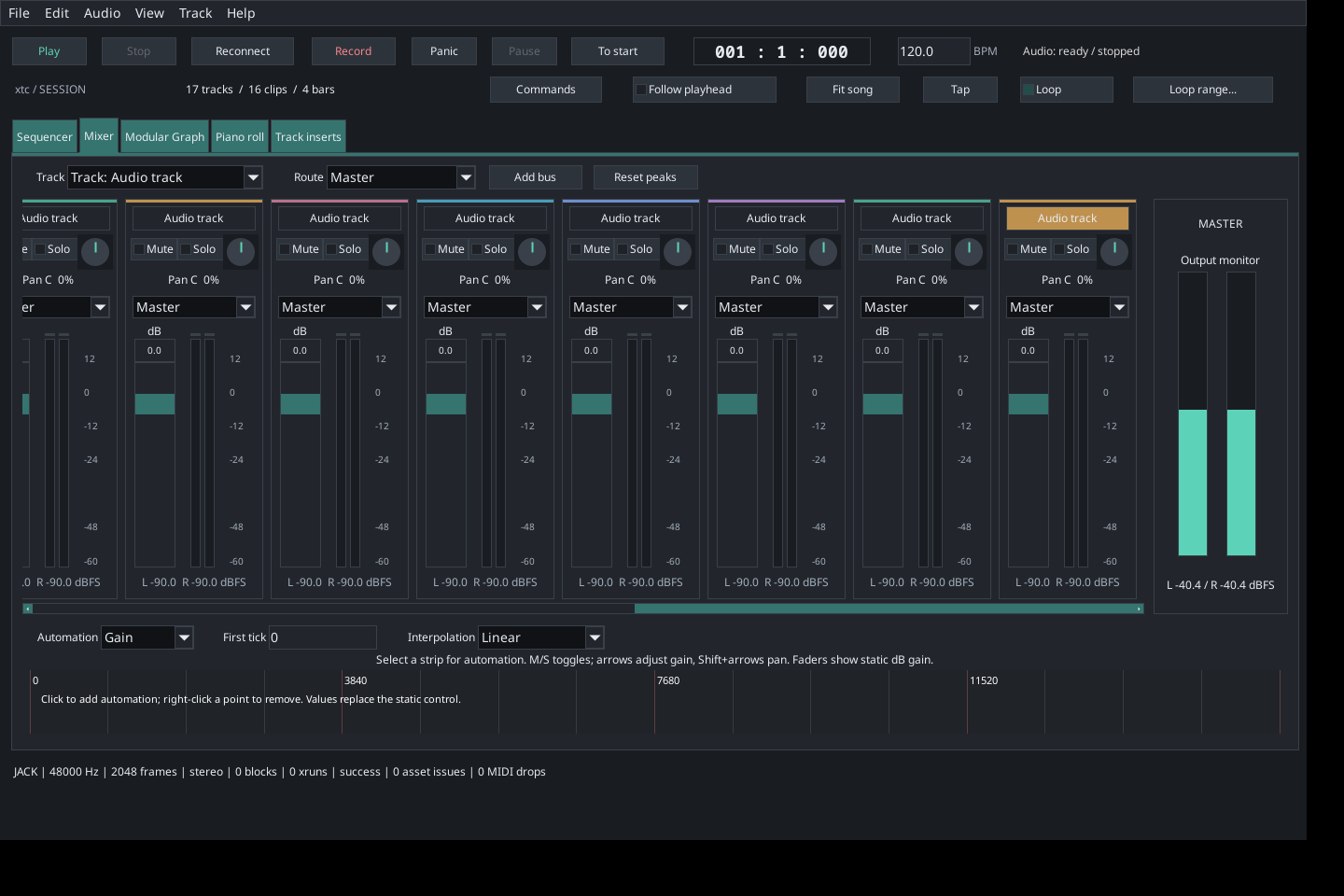
A session with additional tracks demonstrates scrolling through the mixer.
Explore the signal flow
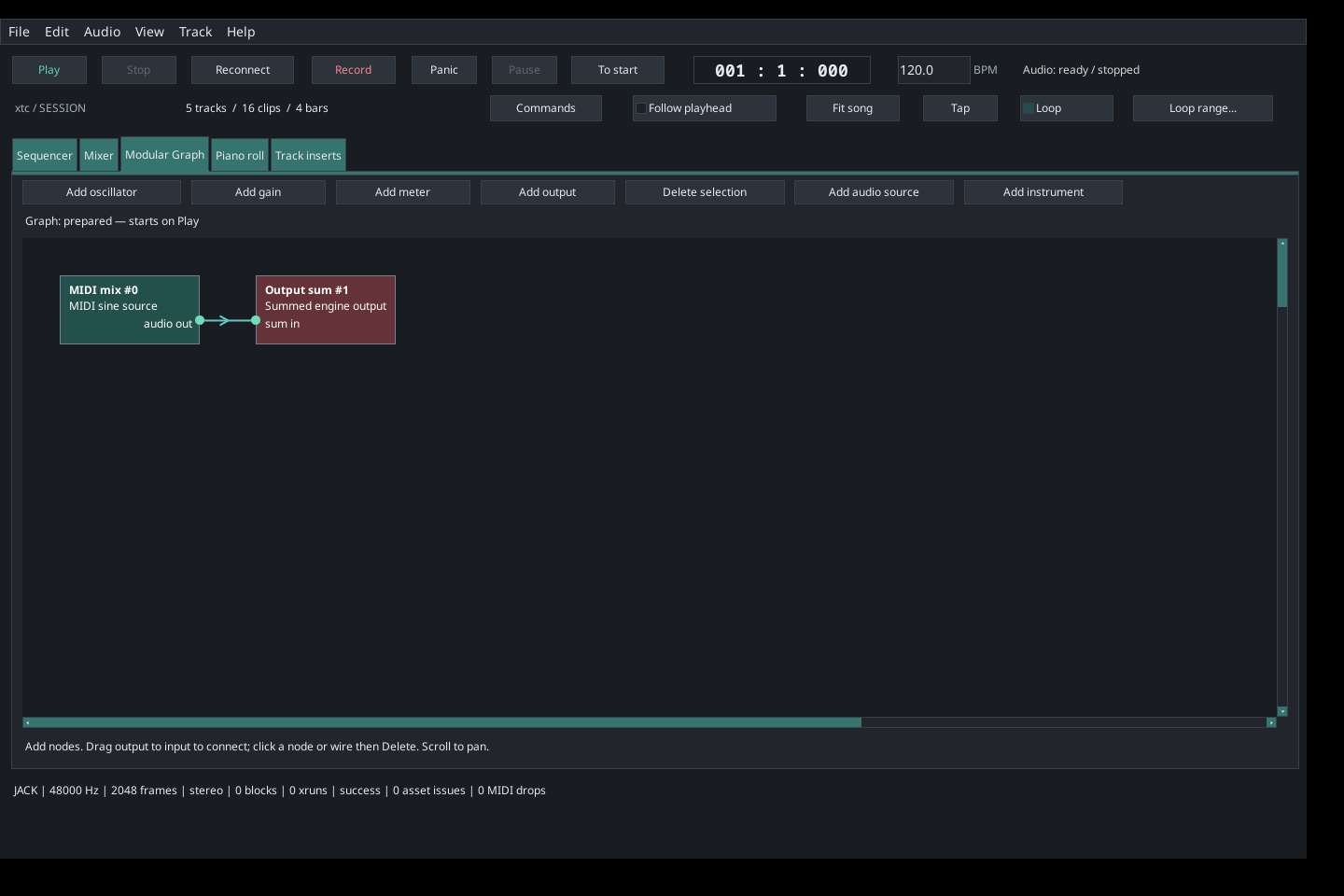
The modular graph displays connected processing nodes and their routing.
Chain installed VST3 effects
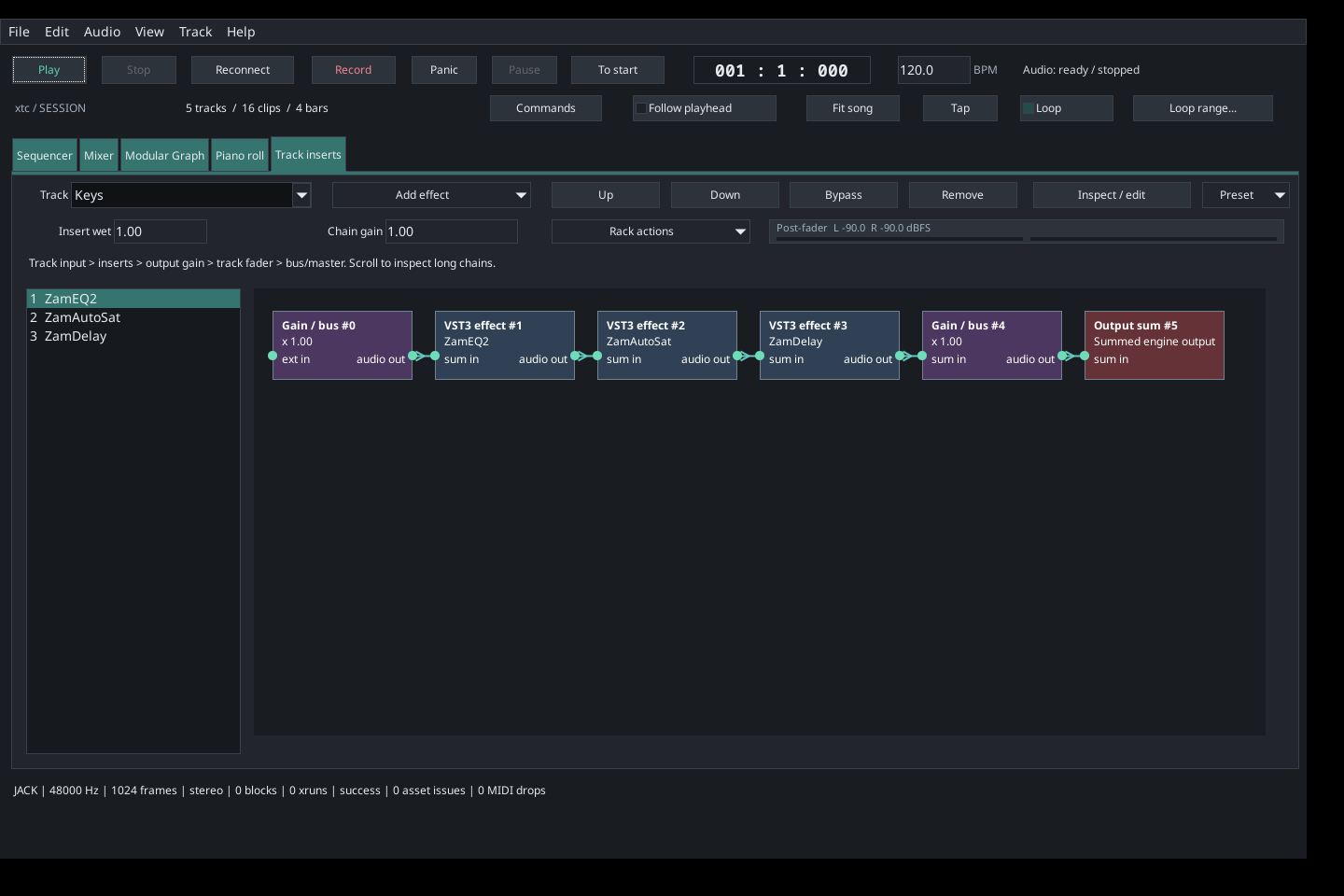
The Keys track hosts ZamEQ2, ZamAutoSat and ZamDelay in its insert graph.
Inspect a hosted VST3 effect
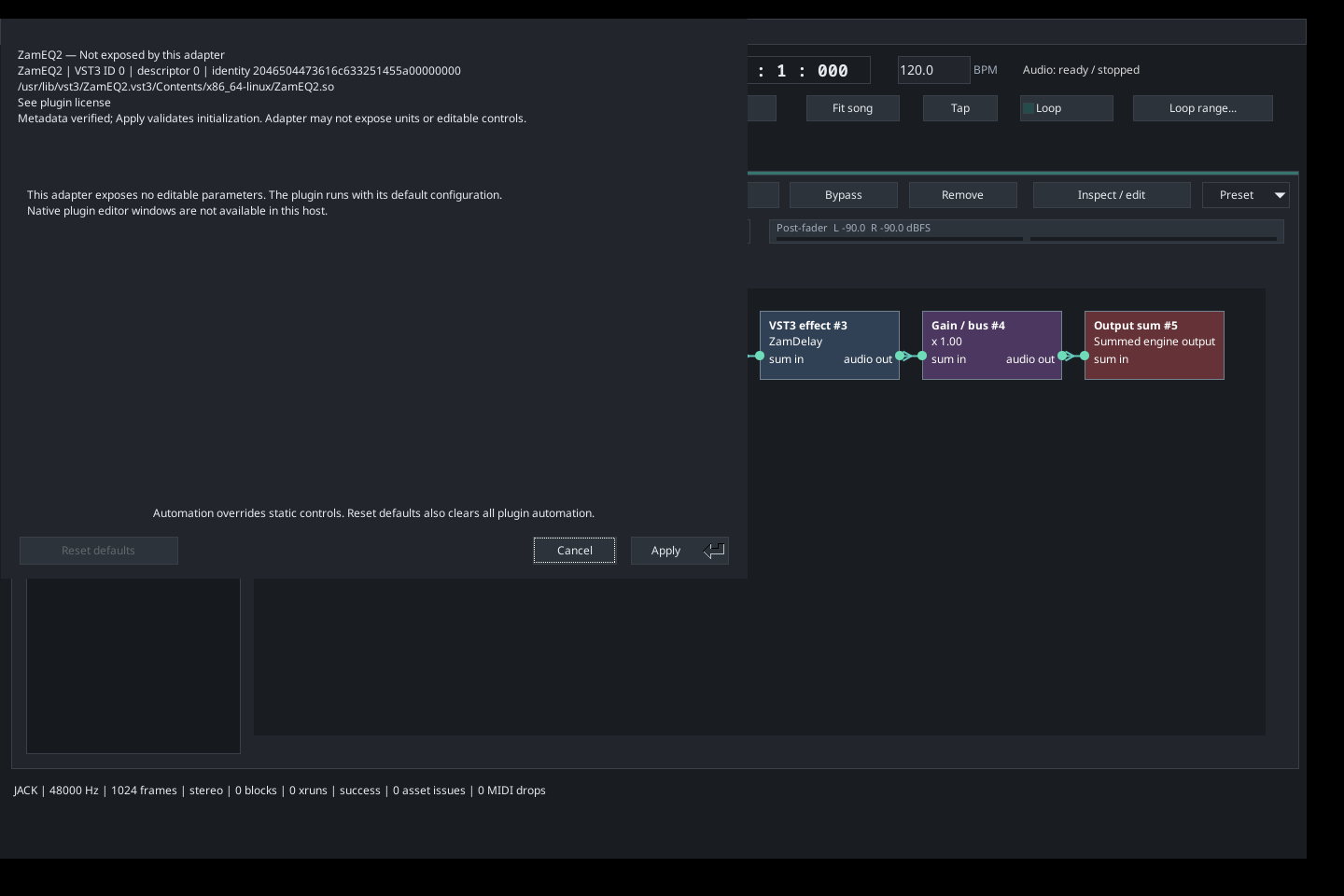
The identity view reports the plugin and the current adapter capabilities.
Create parallel effect branches
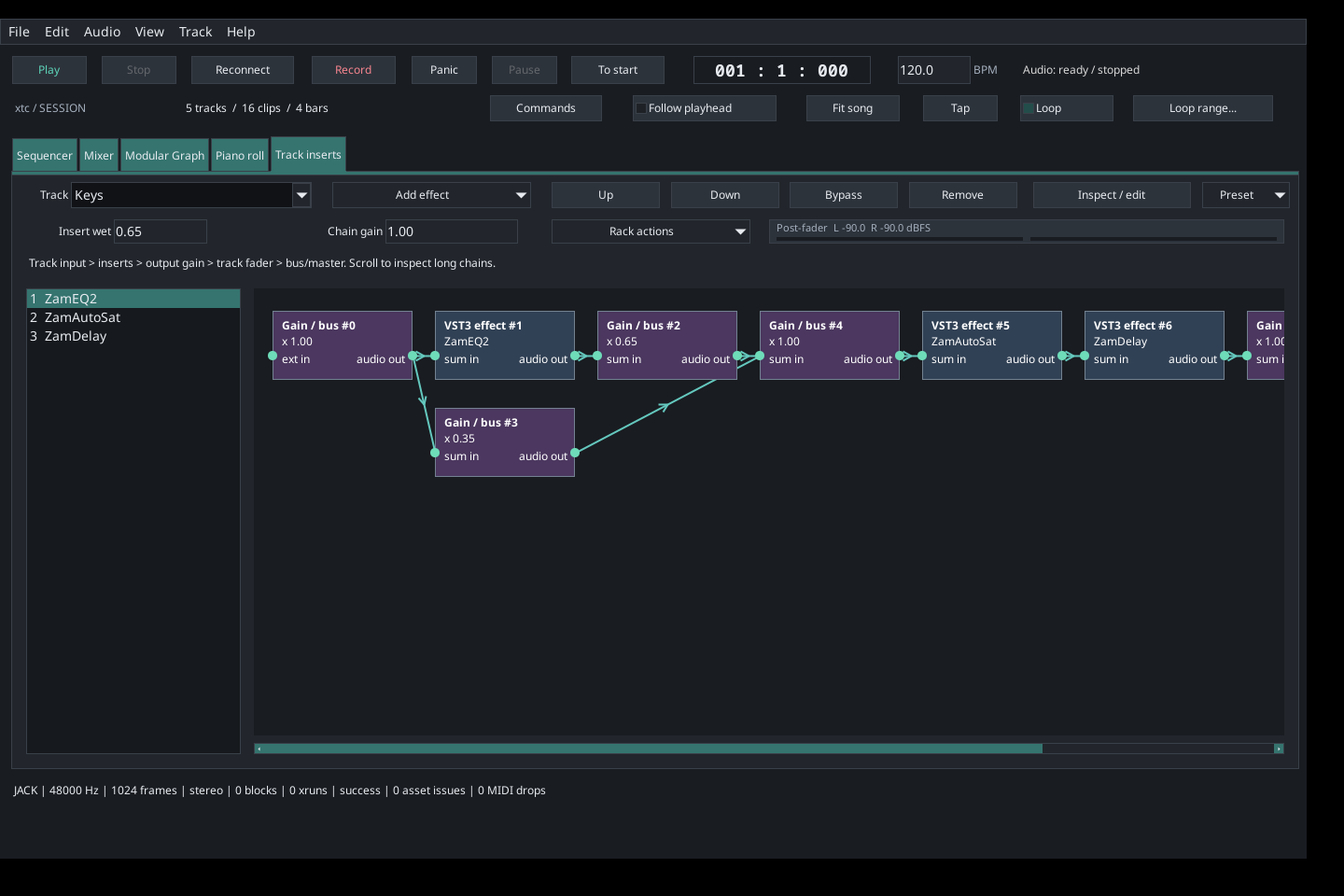
The insert graph shows parallel wet and dry signal paths.
Start with a Dub Echo rack
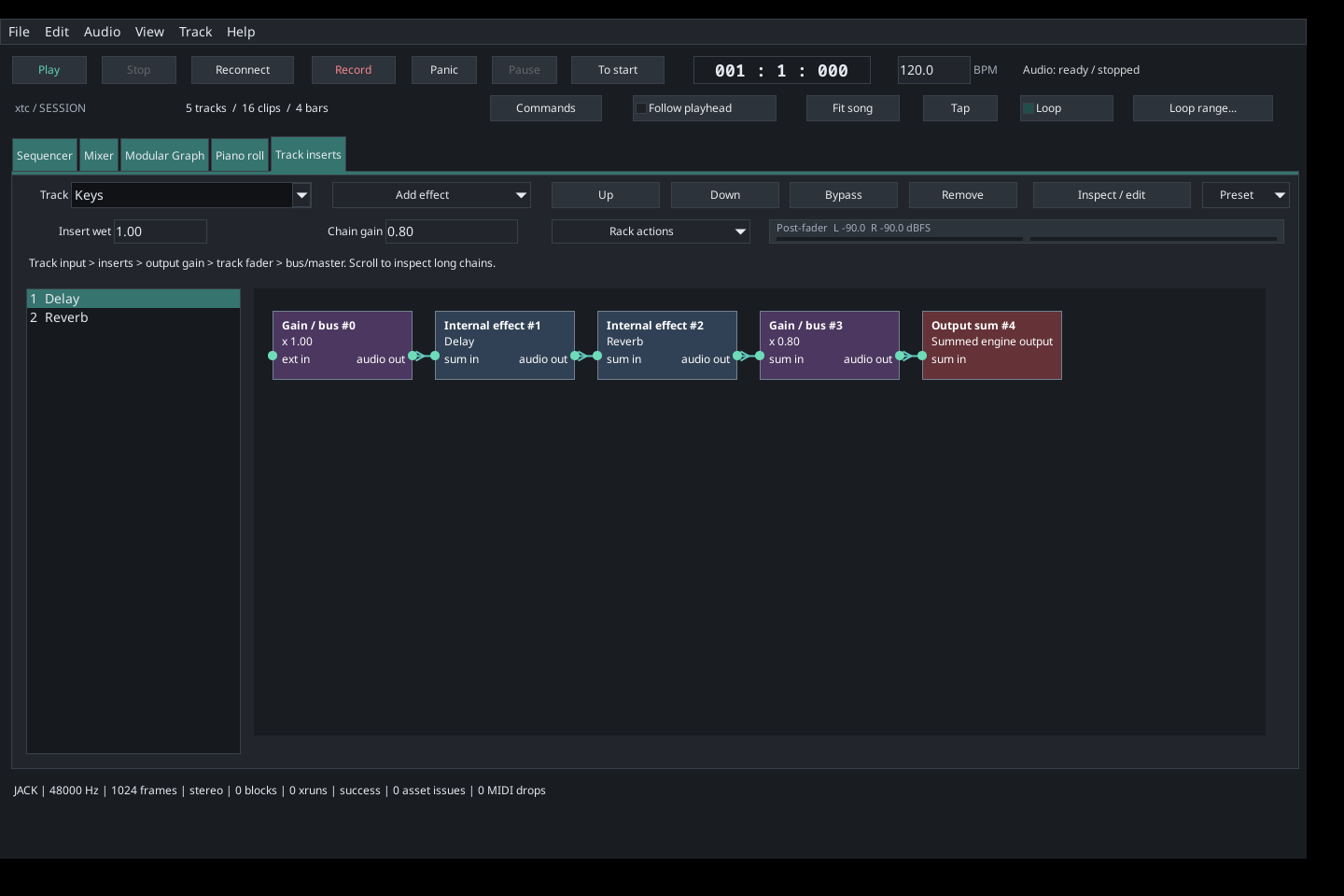
The insert graph displays the internal Dub Echo template and its idle meters.
Manage a complete effect rack
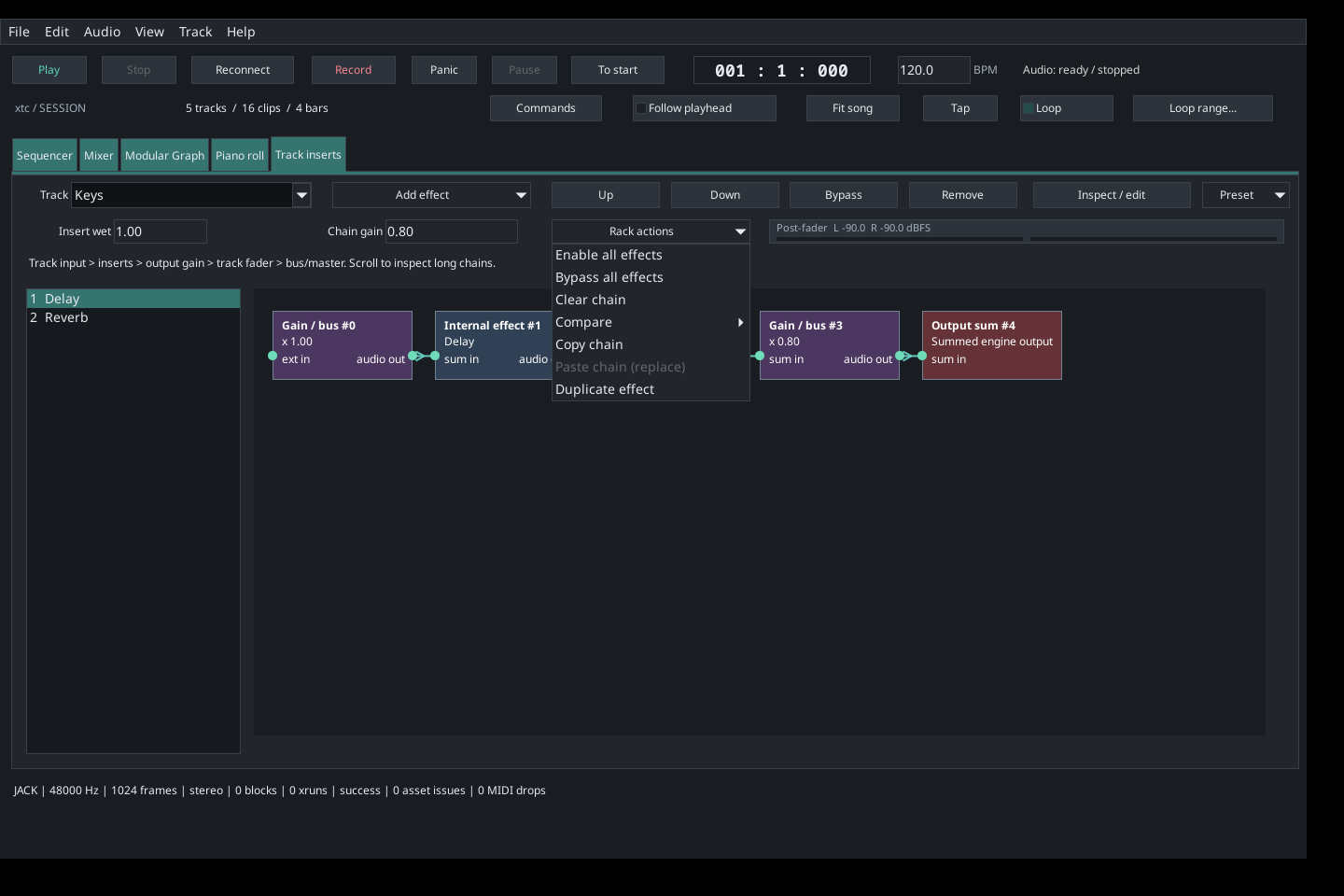
Rack actions expose bulk operations, comparison and chain clipboard controls.
Browse the plugin library
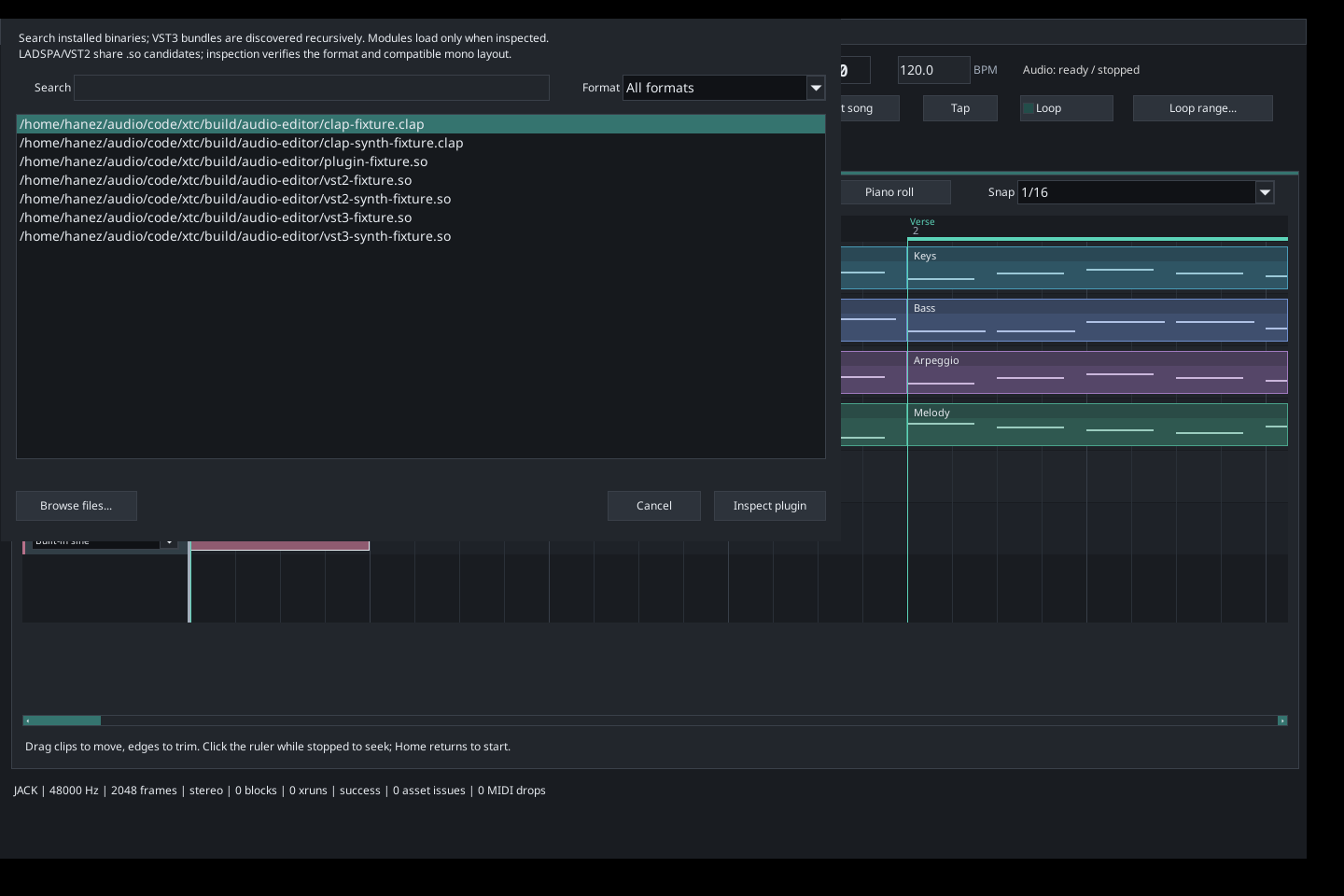
The library presents available plugins for selection.
Inspect plugin descriptors
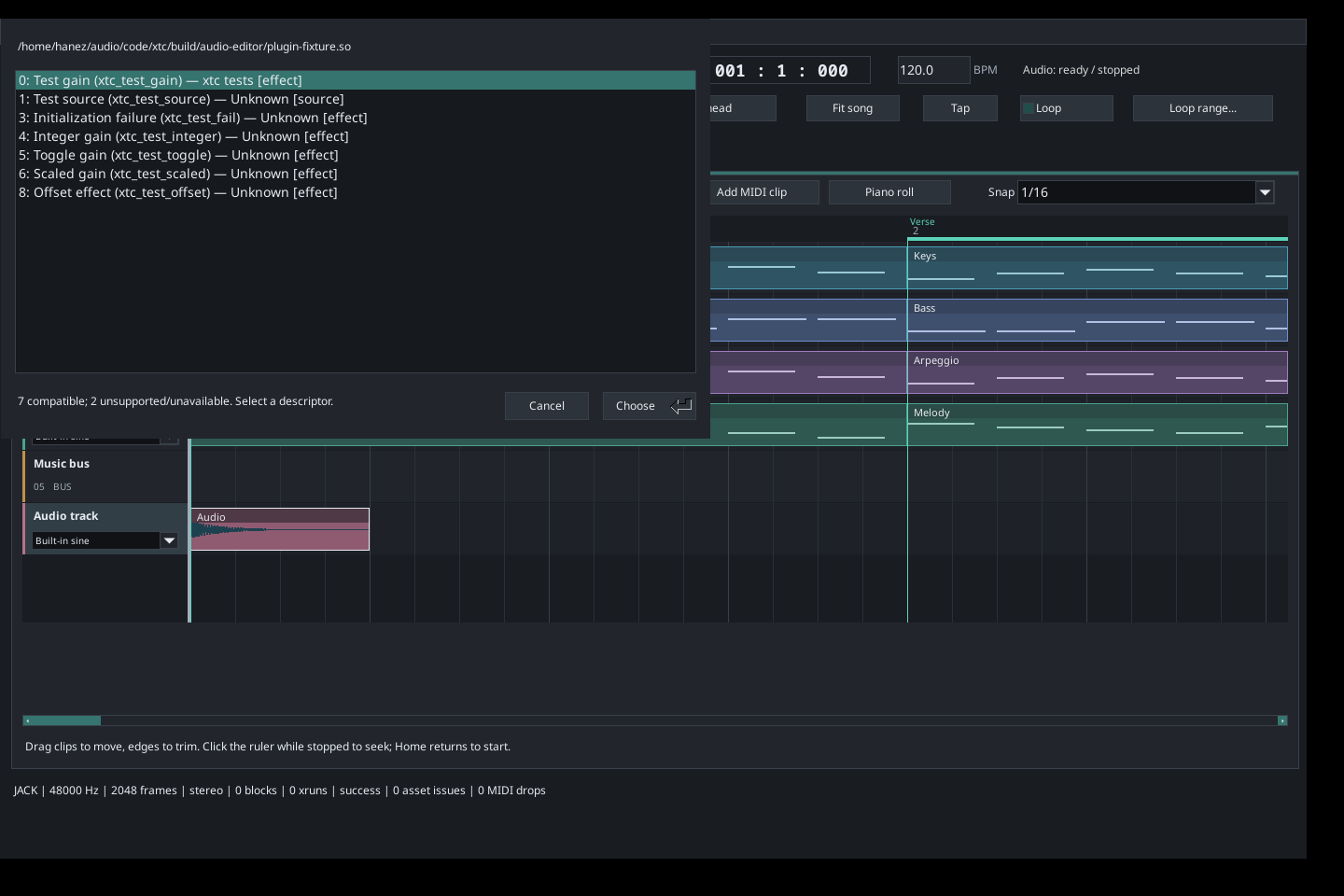
The descriptor browser displays metadata from repository plugin fixtures.
Adjust hosted plugin controls
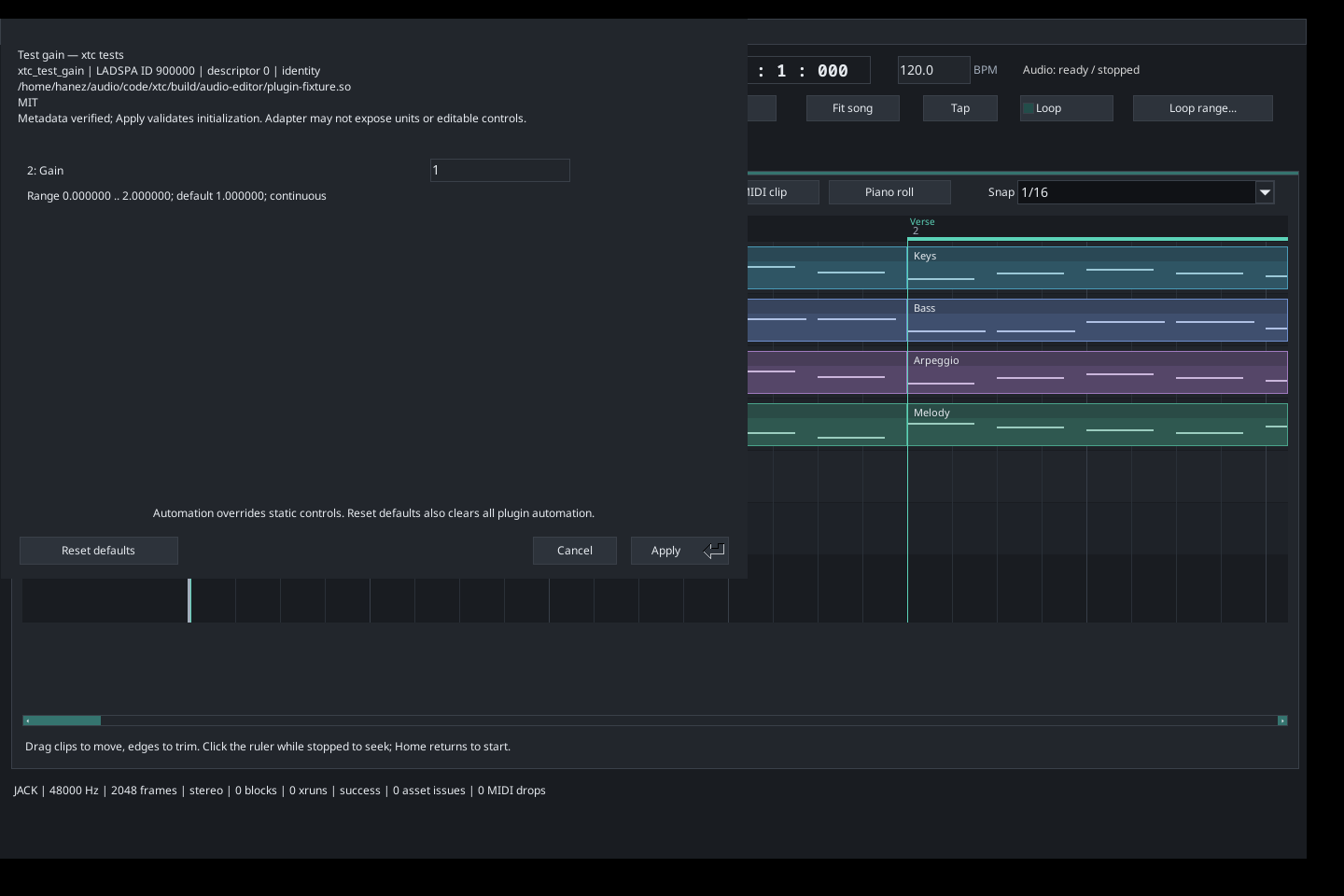
The control editor exposes parameters provided by a repository plugin fixture.
Choose an internal instrument
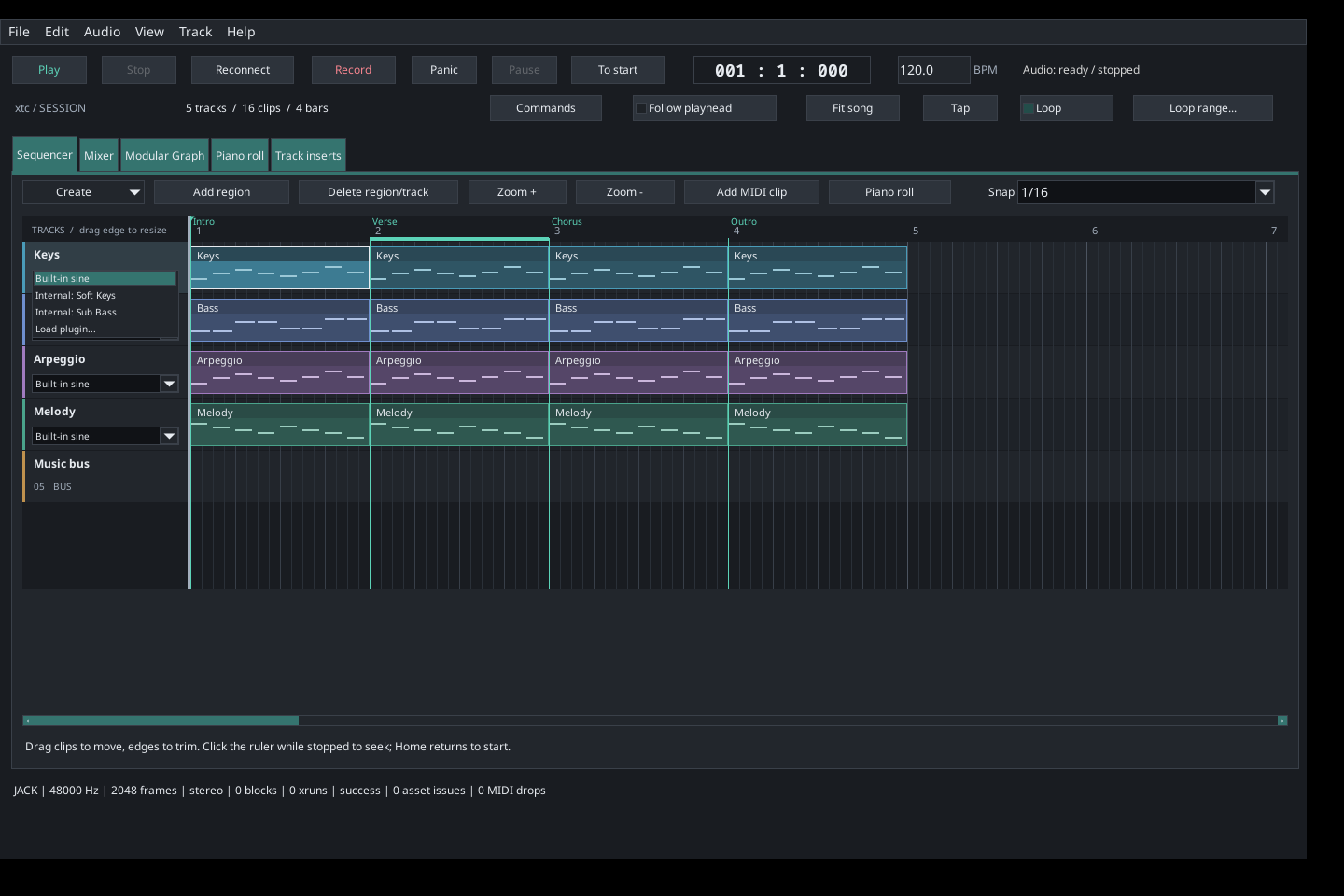
The instrument menu presents the built-in devices available to a track.
Configure an internal delay
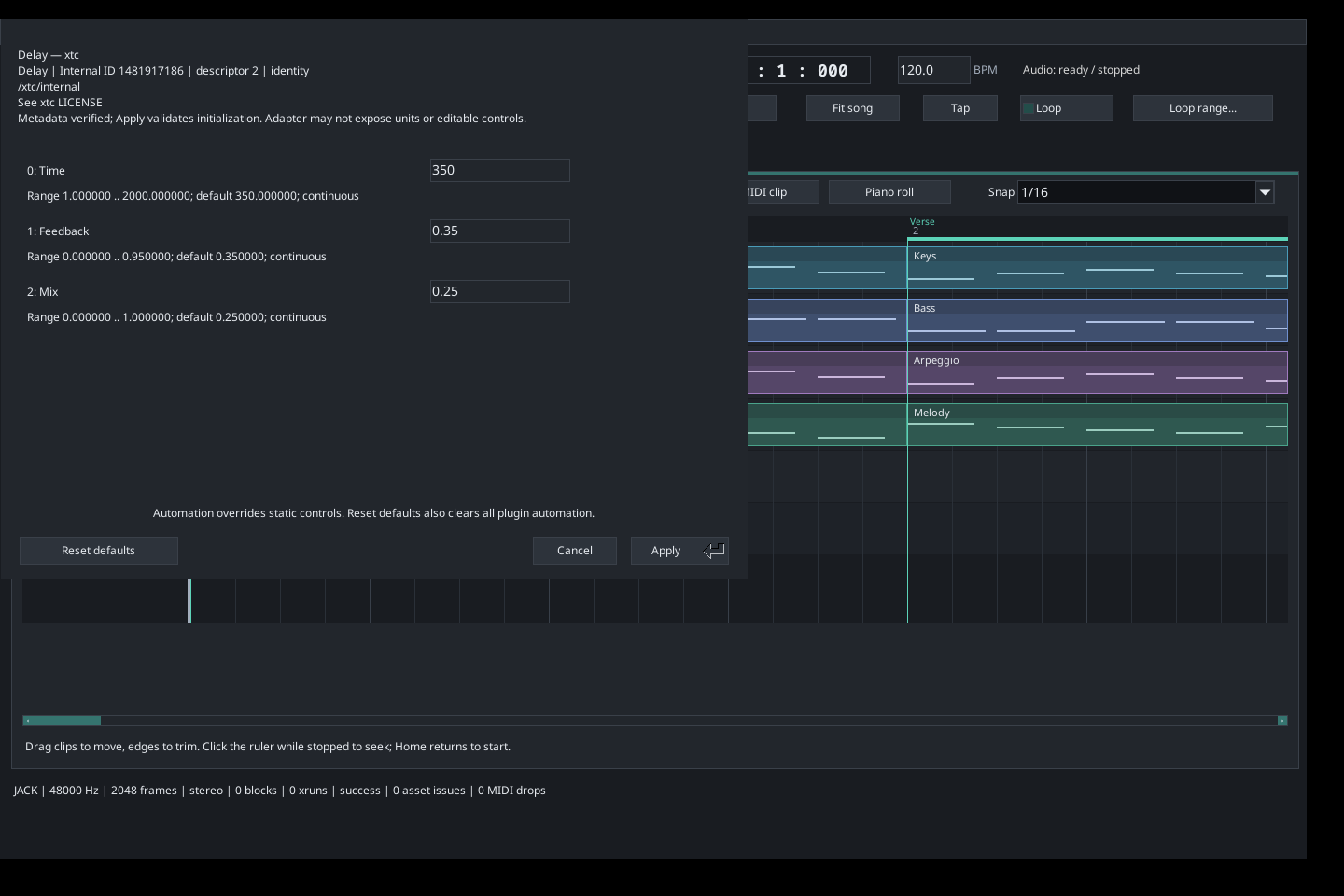
The delay editor presents its available device controls.
Configure an internal reverb

The reverb editor presents its available device controls.
Inspect a CLAP instrument

The host displays descriptor information for a CLAP instrument.
Inspect a VST2 instrument

The host displays descriptor information for a VST2 instrument.
Inspect a VST3 instrument

The host displays descriptor information for a VST3 instrument.
Host the Steinberg SDK example effect
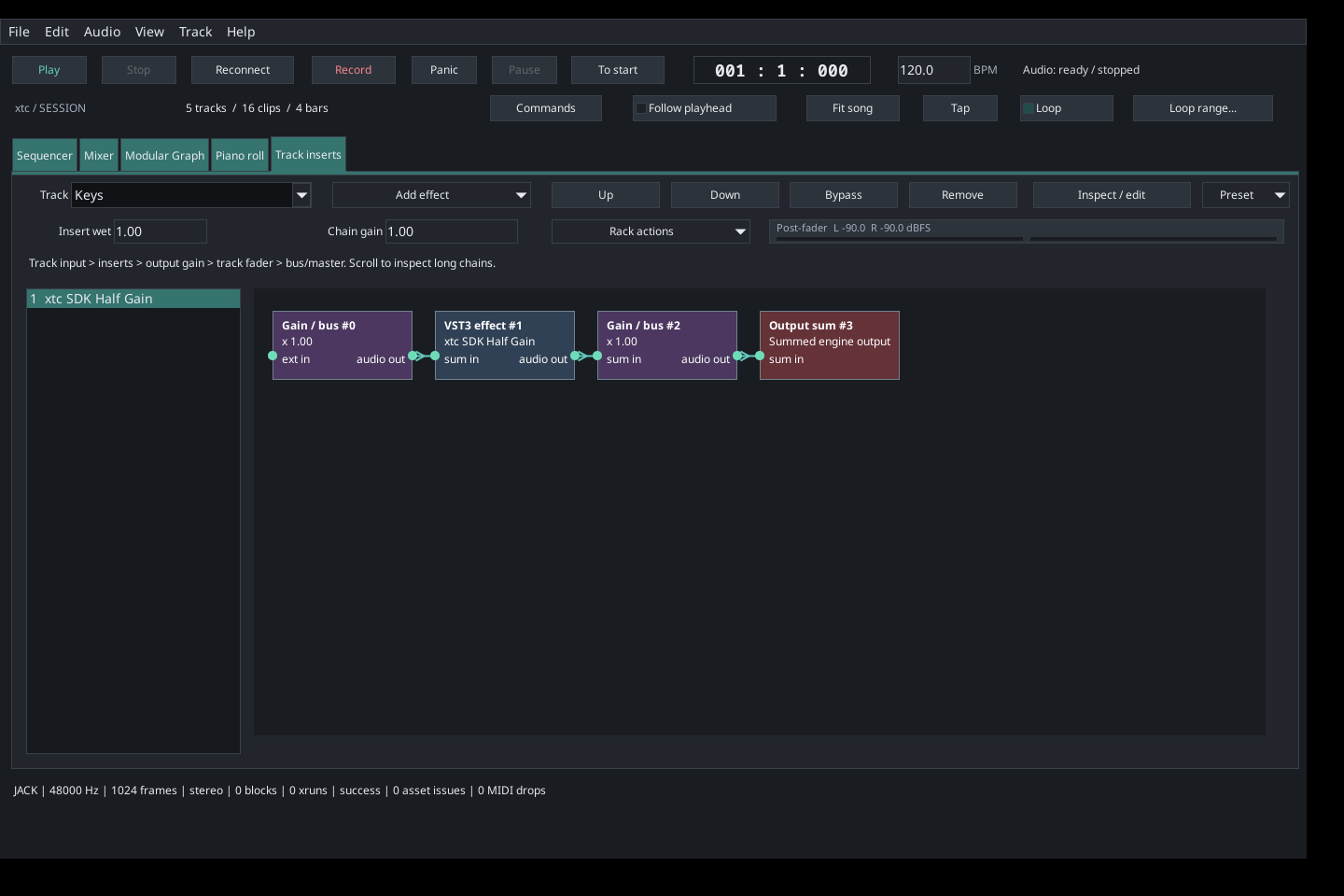
The actual SDK-built Half Gain effect appears in xtc's track insert graph.
Inspect the SDK effect identity

The host reports the Steinberg SDK effect's identity and current adapter limits.
Discover the SDK sine instrument

The plugin chooser displays the instrument from the Steinberg SDK example bundle.
Discover the JUCE instrument

The plugin chooser displays the actual JUCE VST3 instrument bundle.
Play with the Soft Keys interface
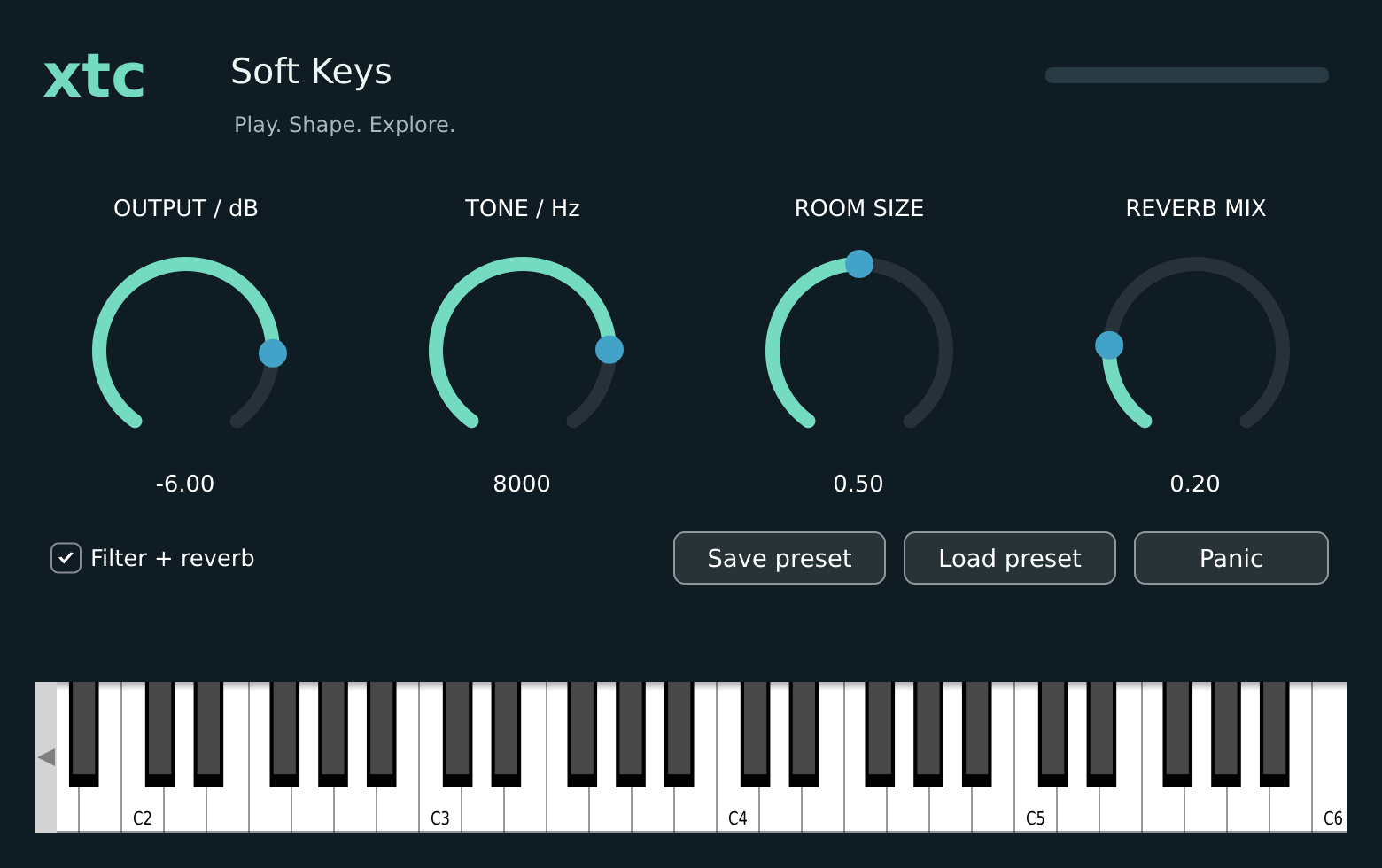
The actual JUCE editor is rendered directly, showing presets, parameter controls and an on-screen keyboard.
Connect MIDI controllers to parameters
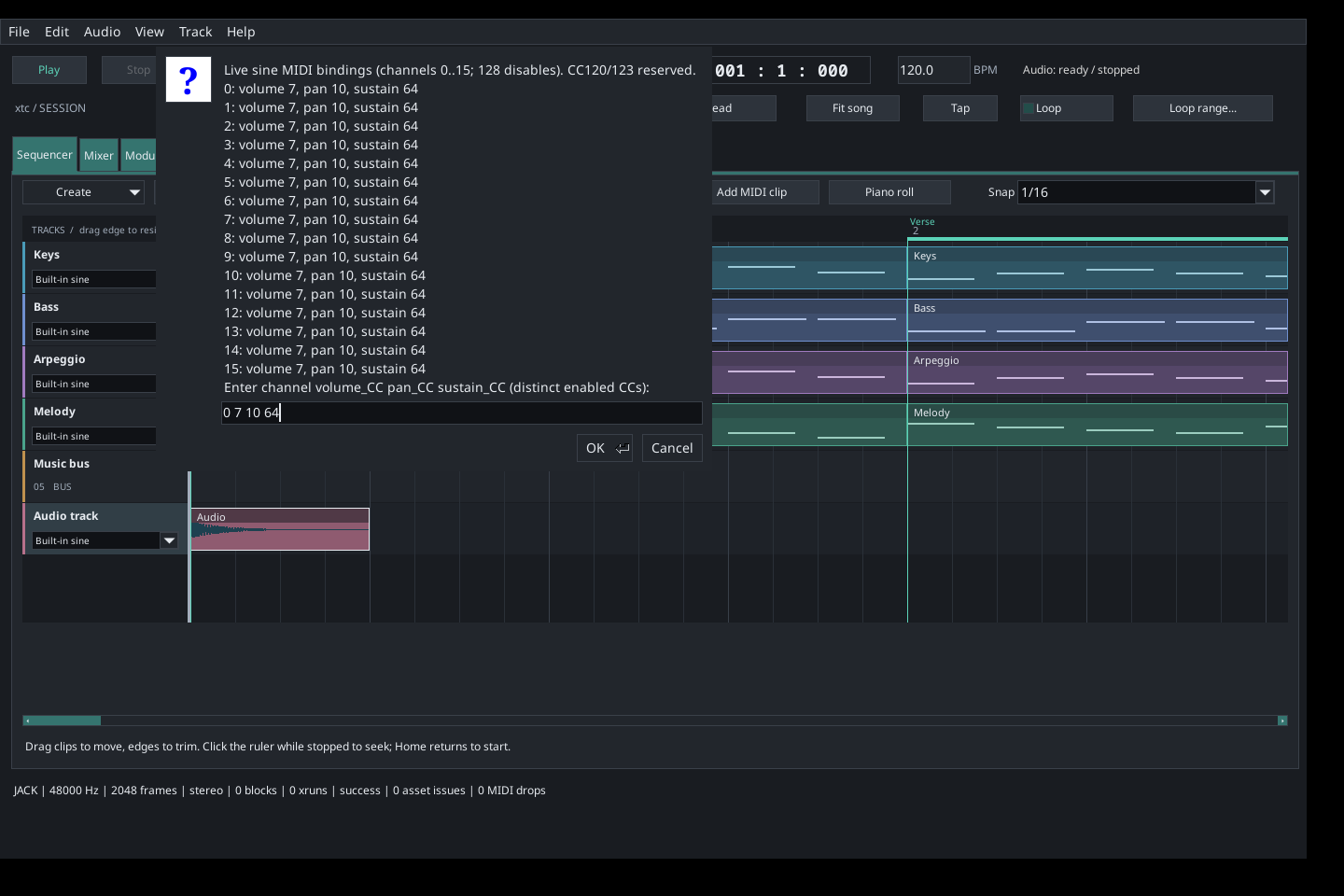
The controller mapping interface exposes MIDI control assignments.
Configure audio preferences
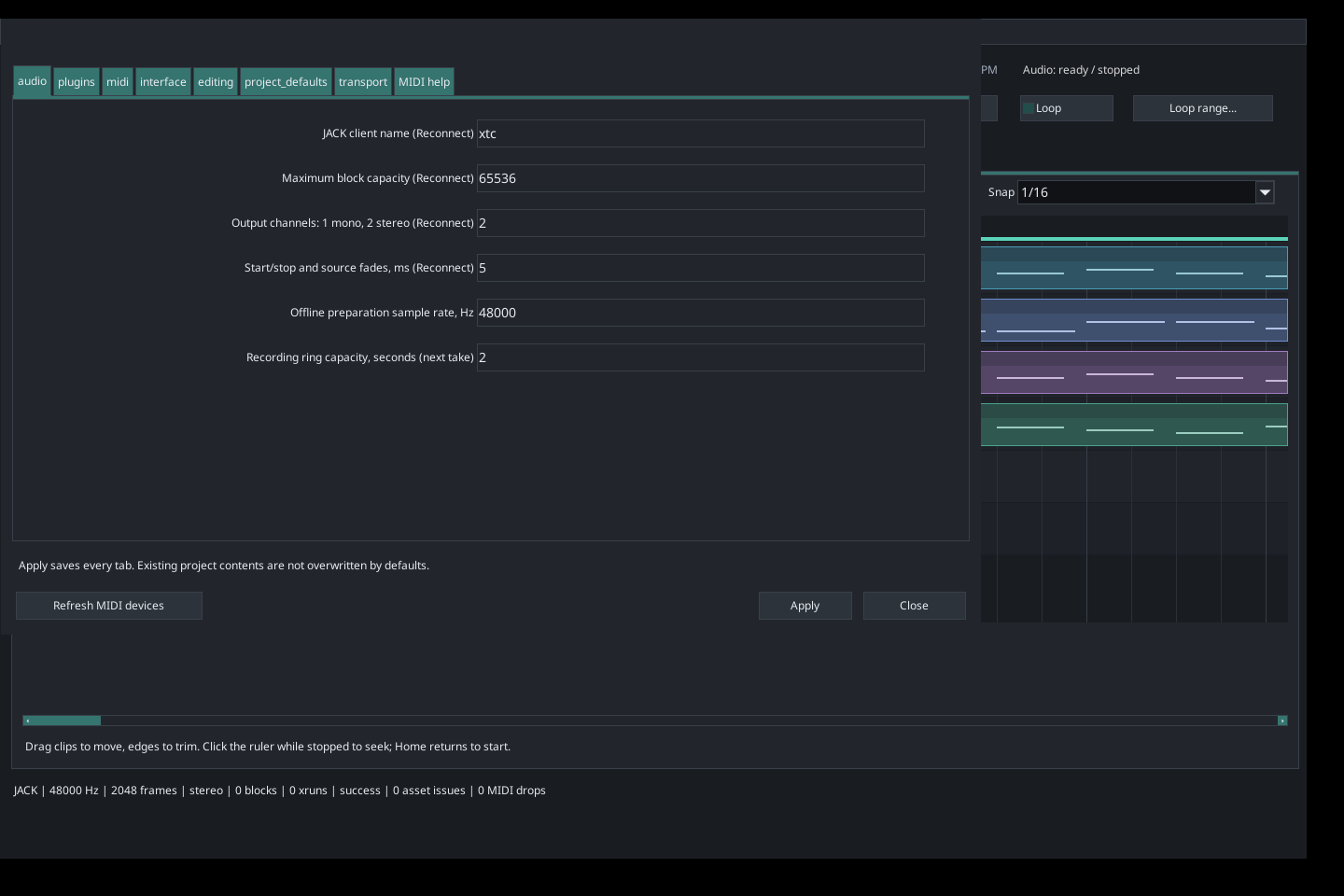
The audio preferences tab presents the application's audio settings.
Choose MIDI sources and destinations
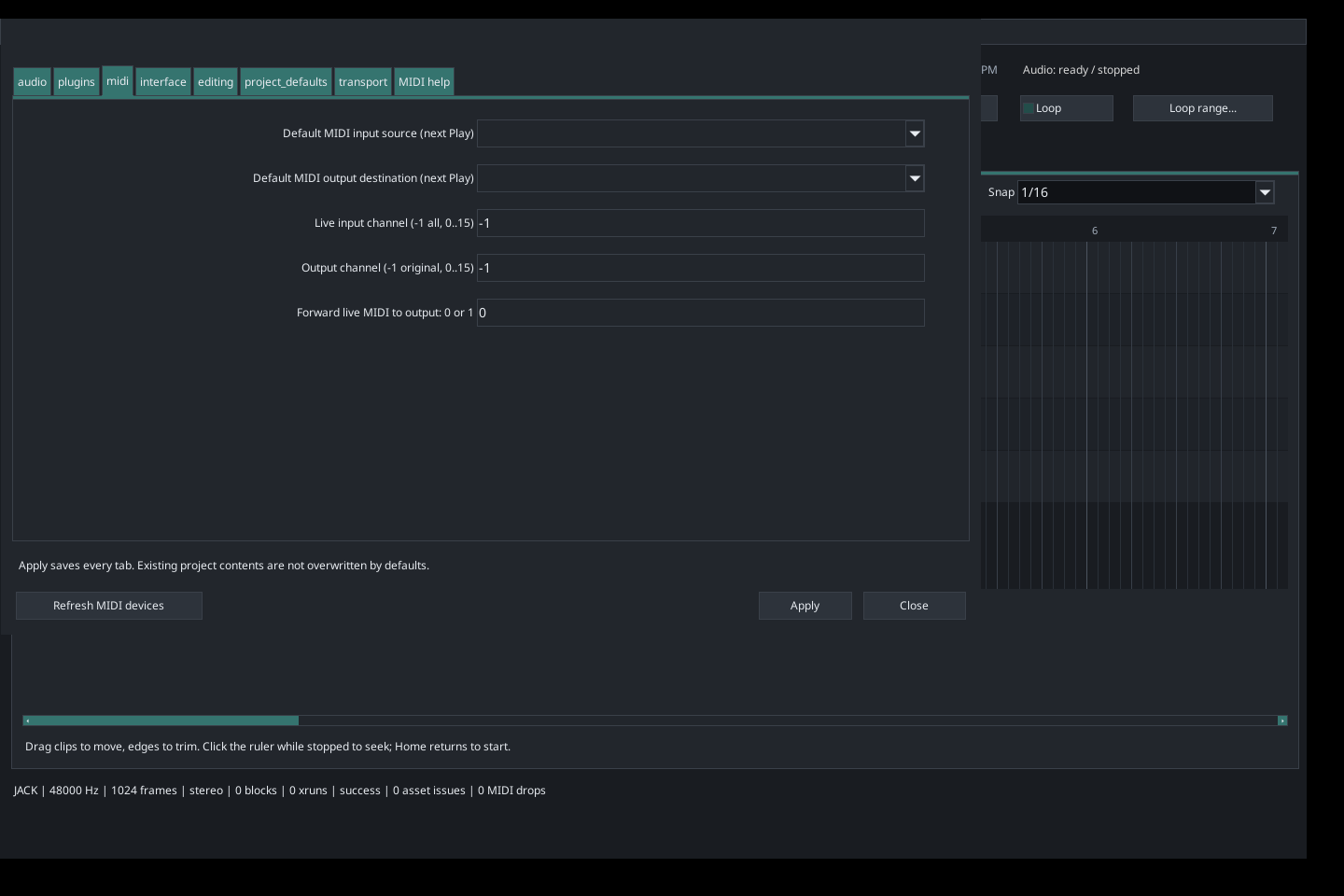
MIDI preferences provide port choices, channel filtering and thru settings.
Browse real MIDI input devices
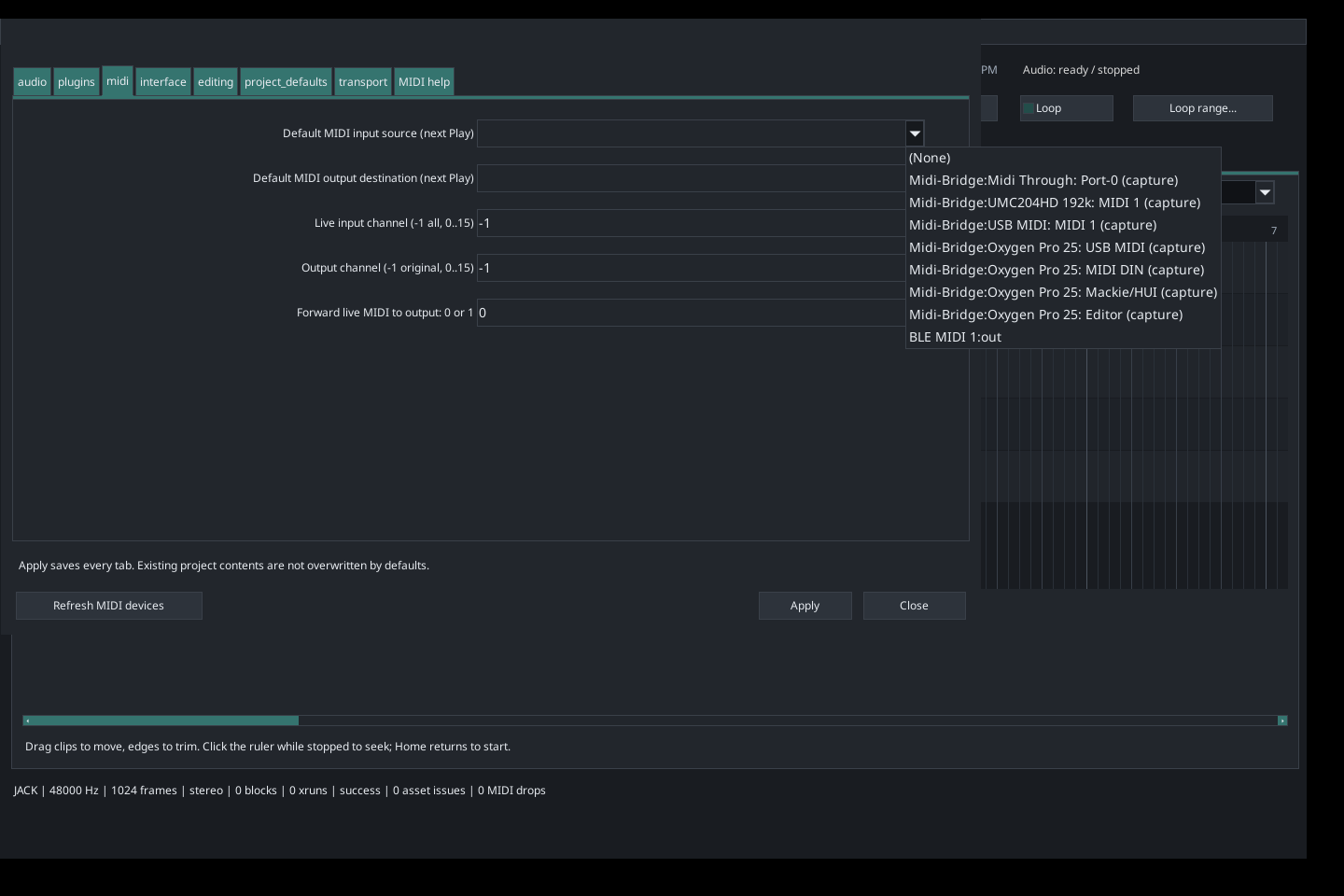
The open input dropdown lists actual MIDI sources exposed by the host; no route is selected.
Understand MIDI setup and defaults
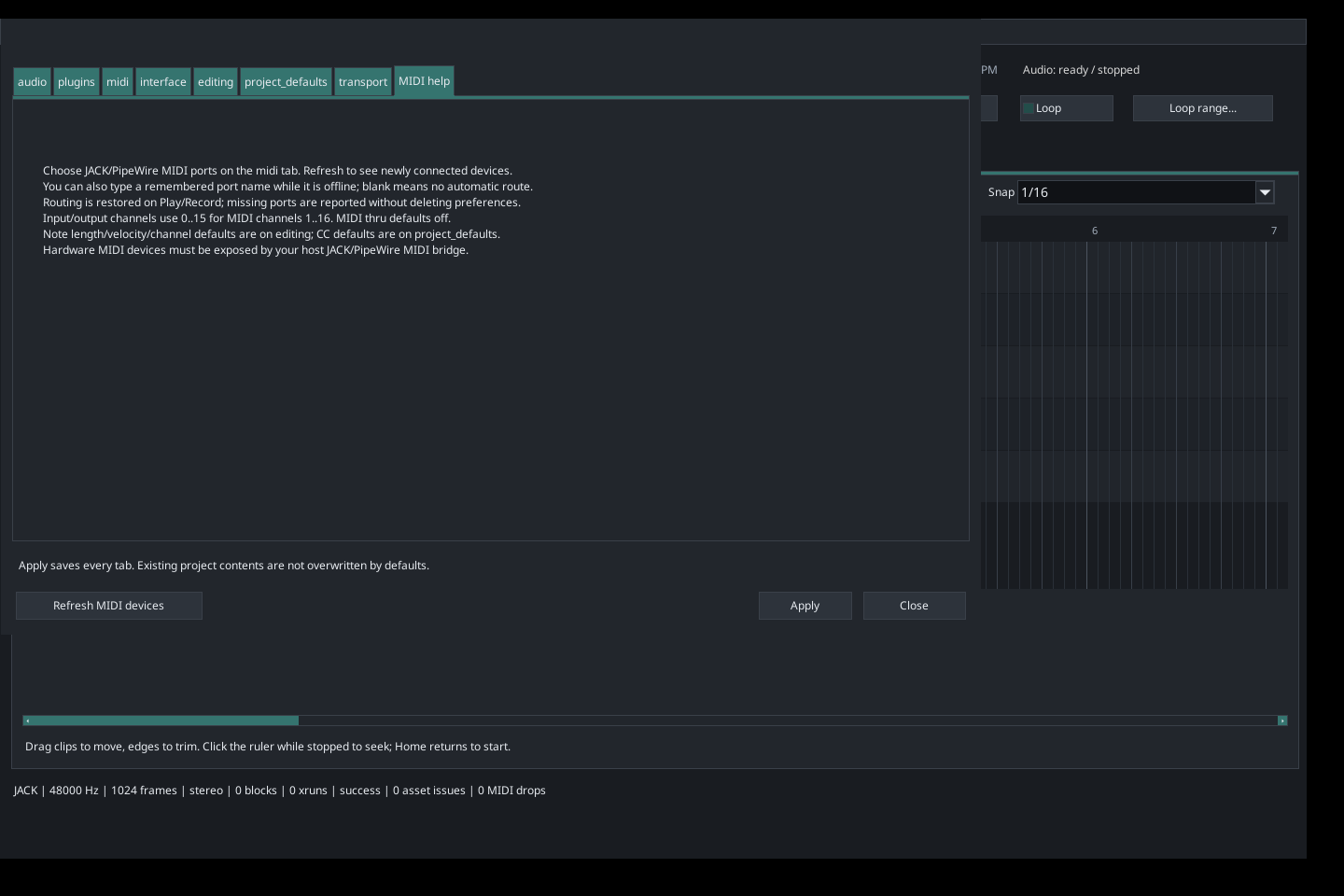
The preferences help page explains device routing and MIDI editing defaults.
Configure plugin preferences
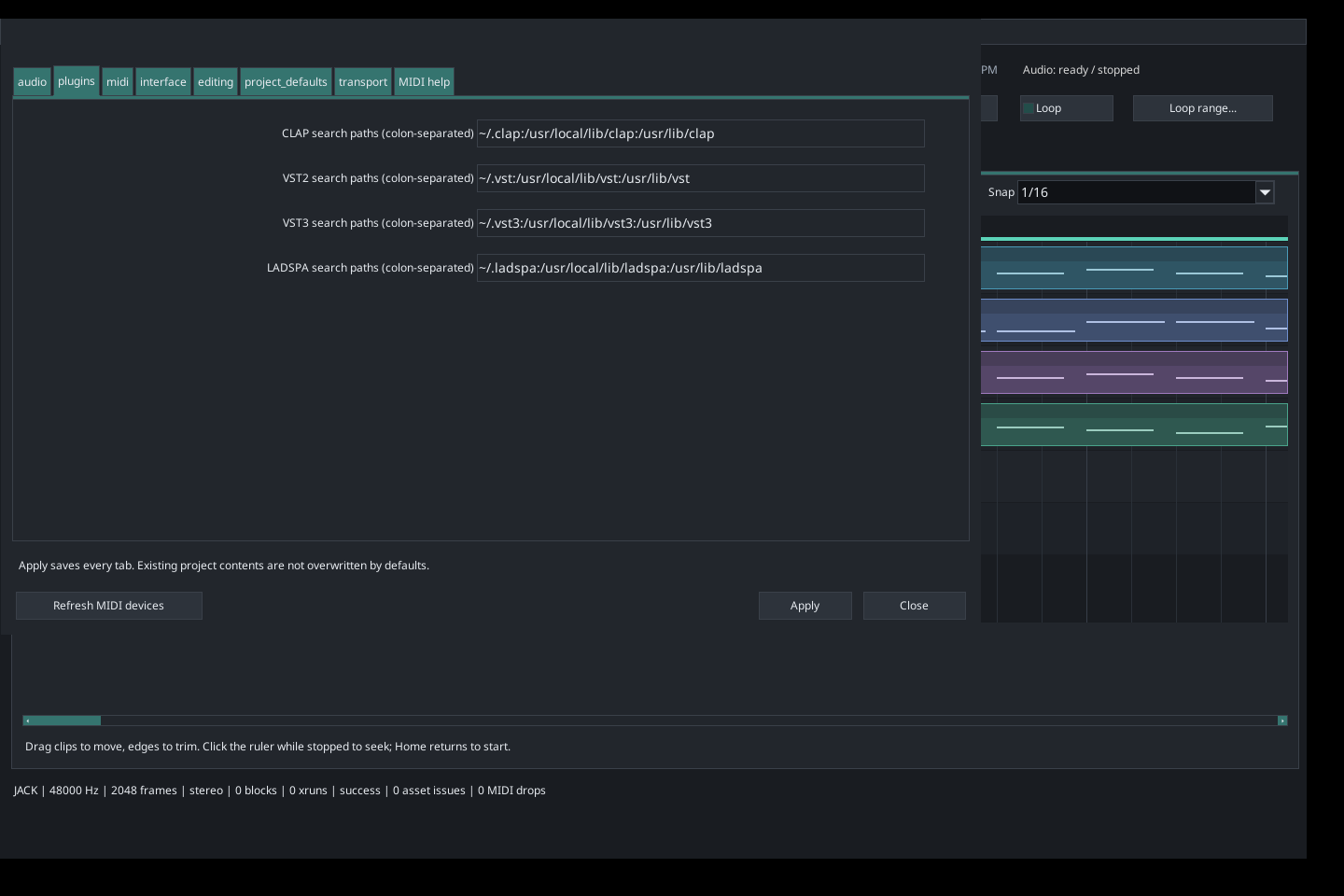
The plugin preferences tab presents plugin discovery settings.
Adjust the workspace preferences
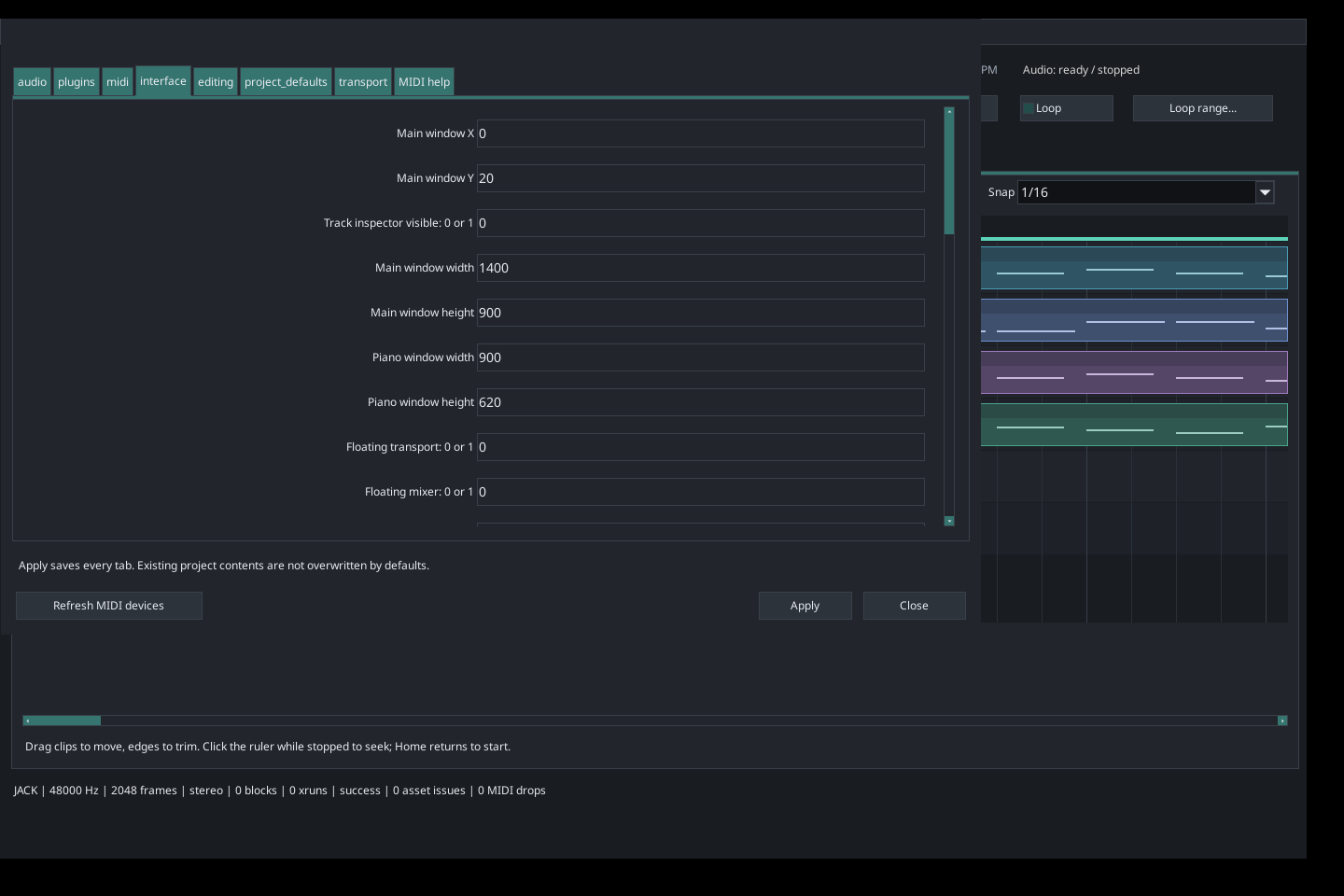
The interface preferences tab presents appearance and layout settings.
Set editing defaults
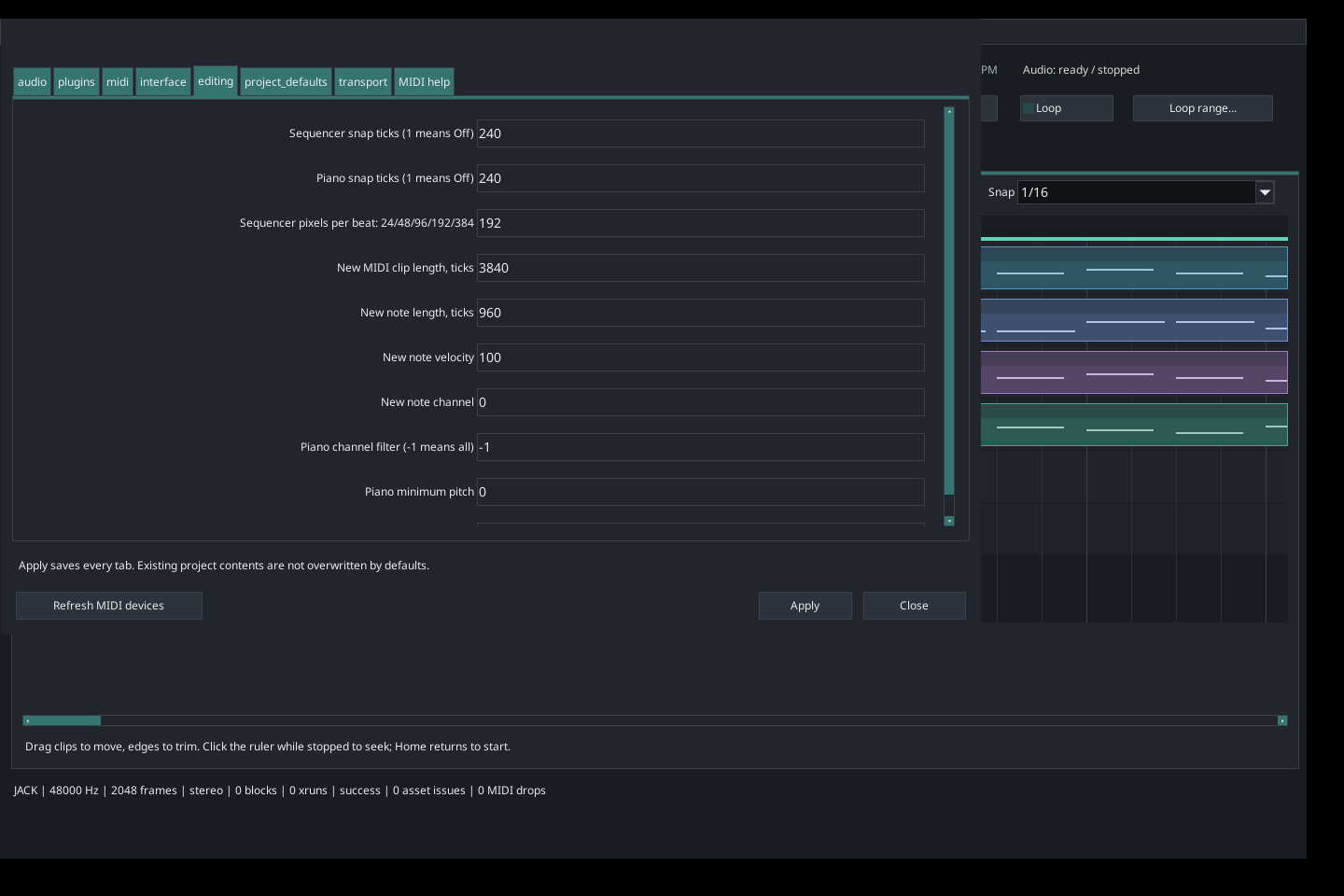
The editing preferences tab includes defaults for new MIDI notes.
Set project defaults
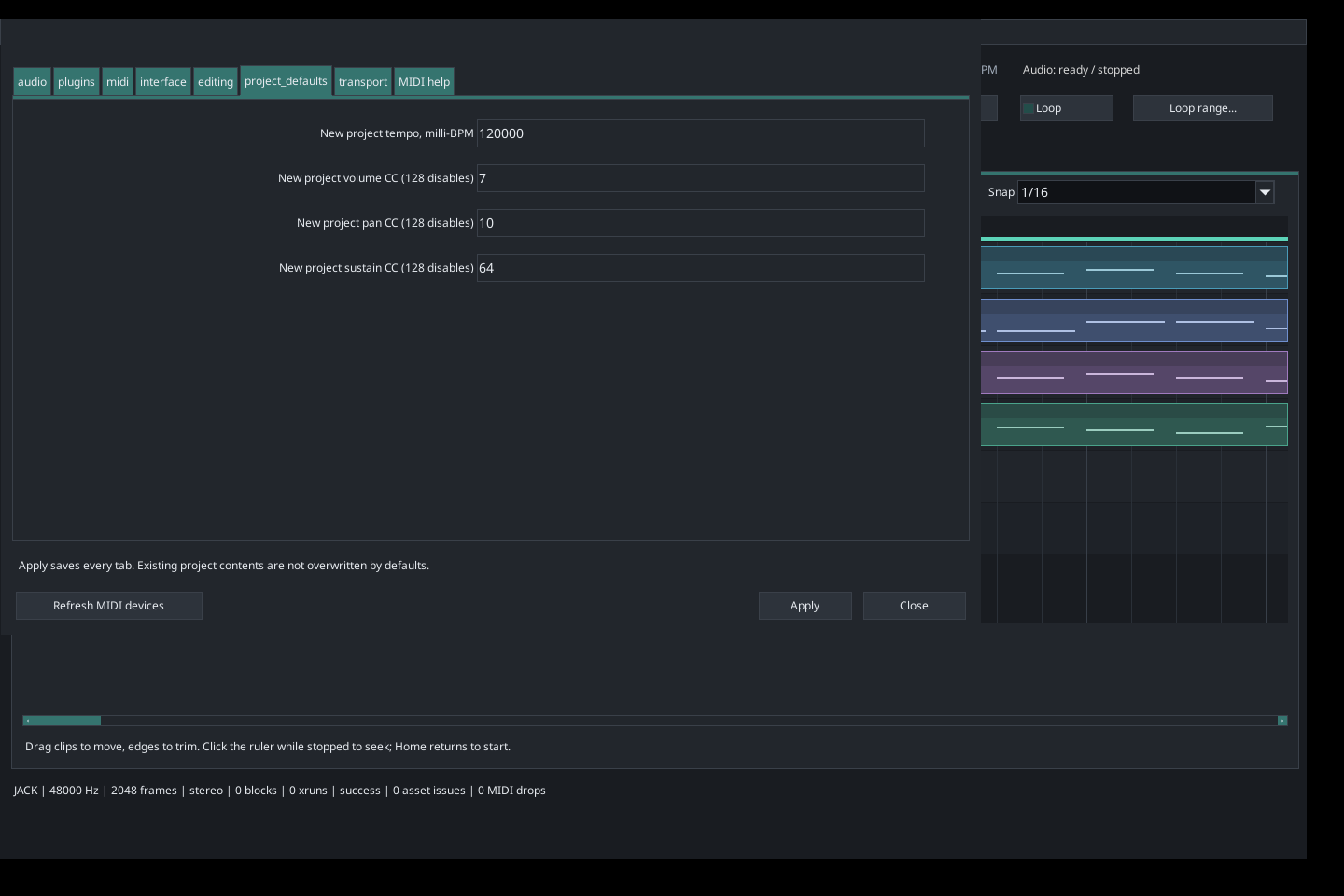
The project defaults tab presents settings used when creating project content.
Configure transport preferences

The transport preferences tab presents playback and navigation settings.
Find an application command
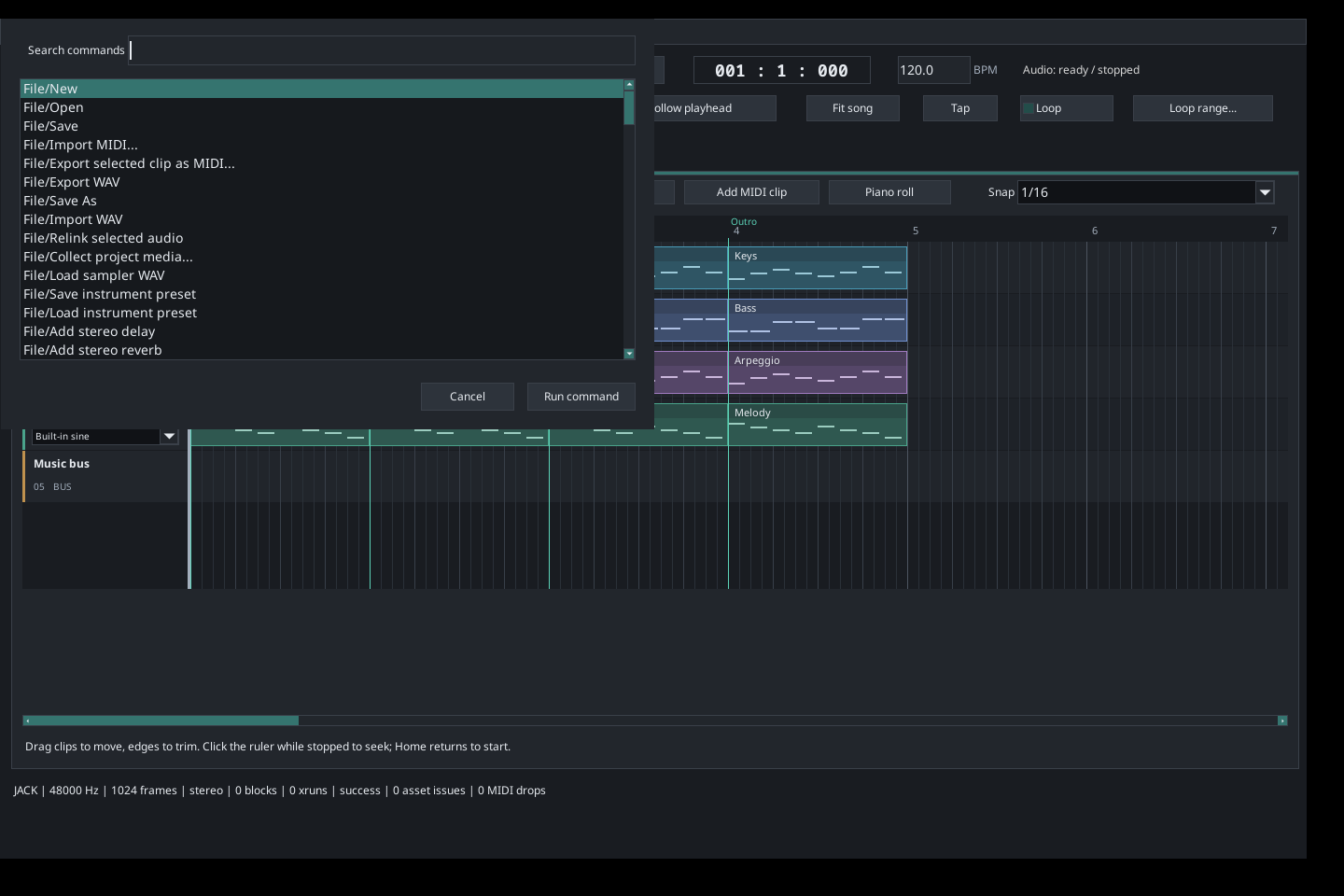
The command palette provides access to the current application action list.
Keep transport controls within reach

The transport floats in a separate window with BPM and loop settings.
Give the mixer its own window

The mixer is detached from the main workspace.
Spread the workspace across windows
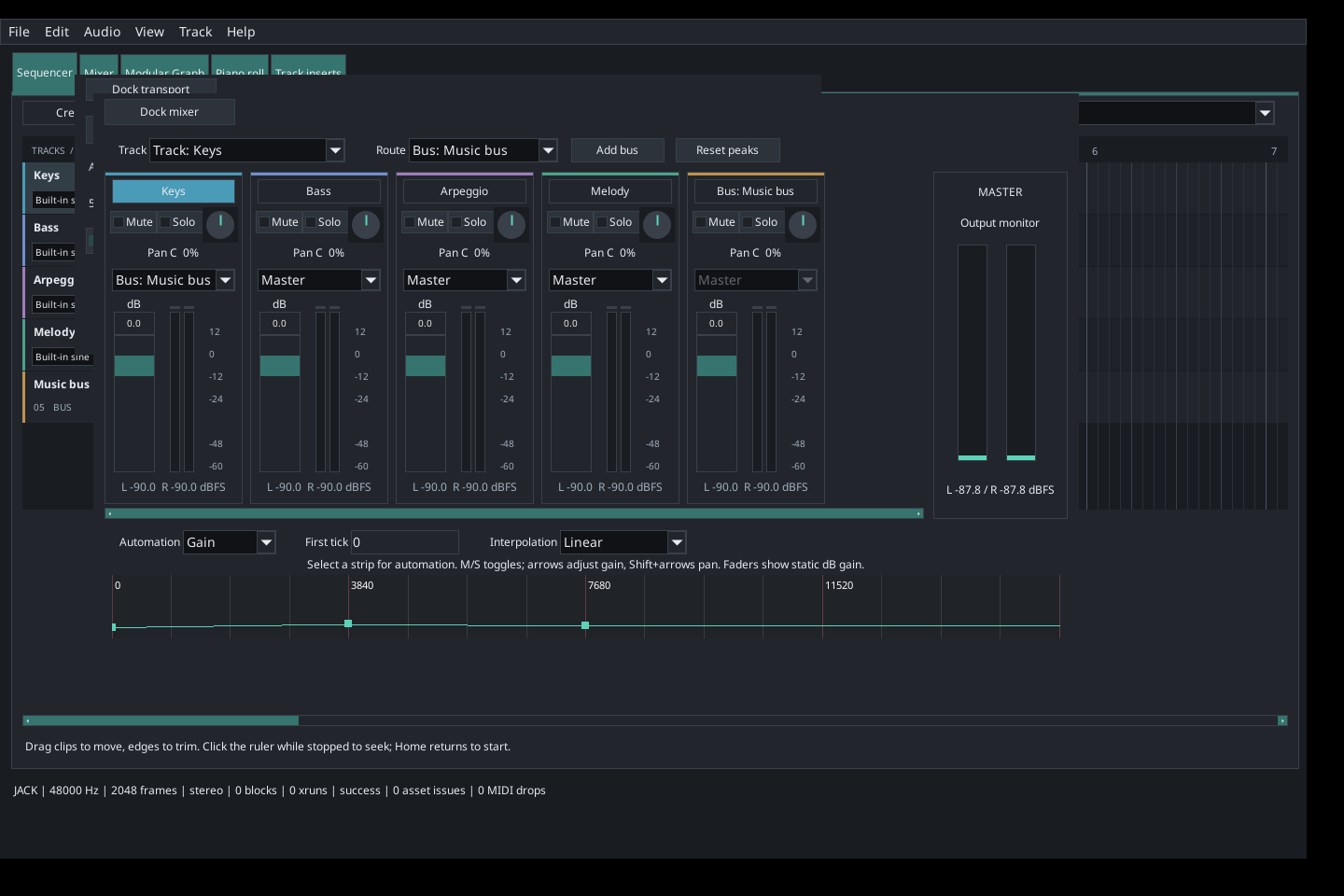
Transport and mixer panels float alongside the main application window.
Arrange in a separate window
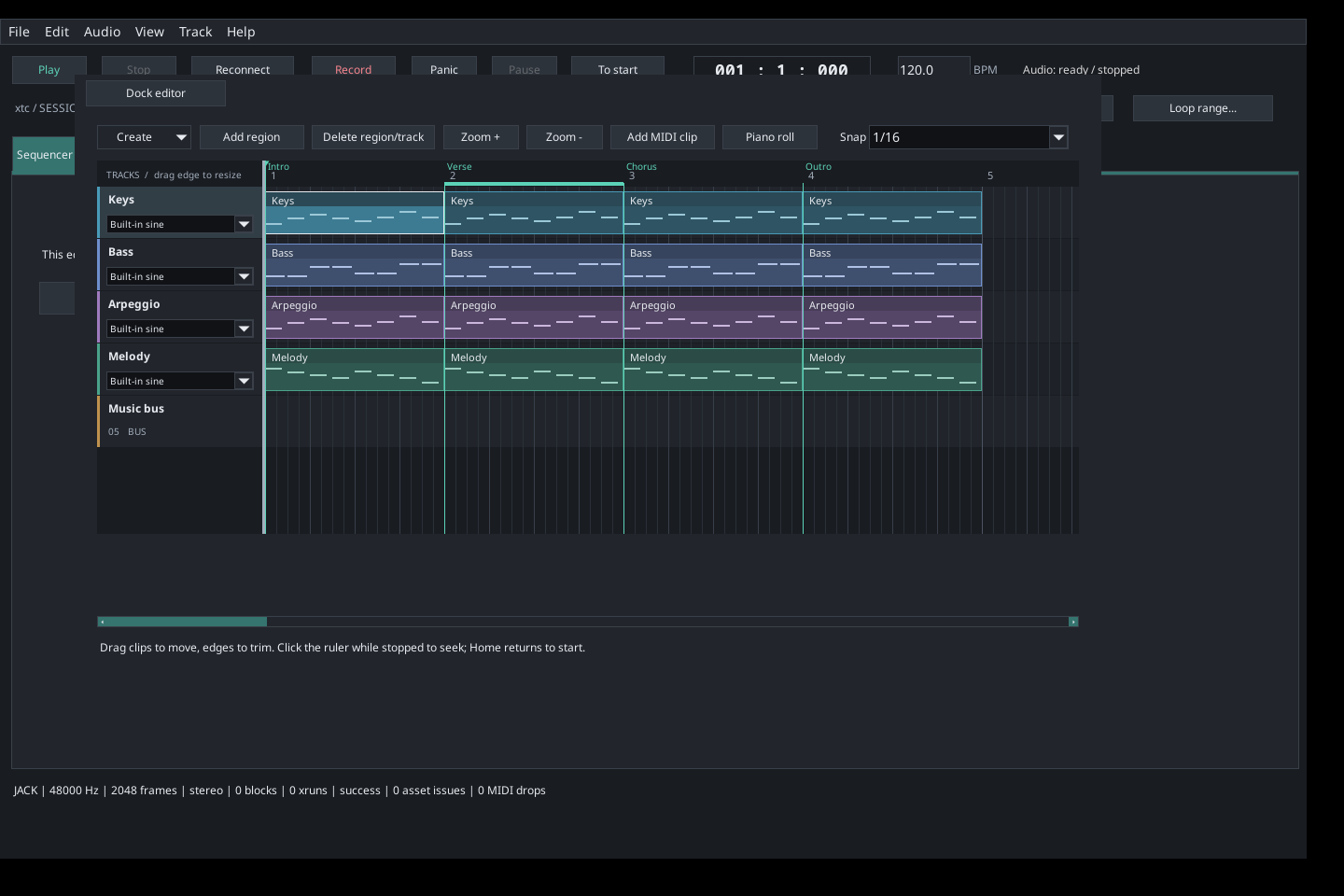
The sequencer is detached from the main workspace.
Route signals in a separate window
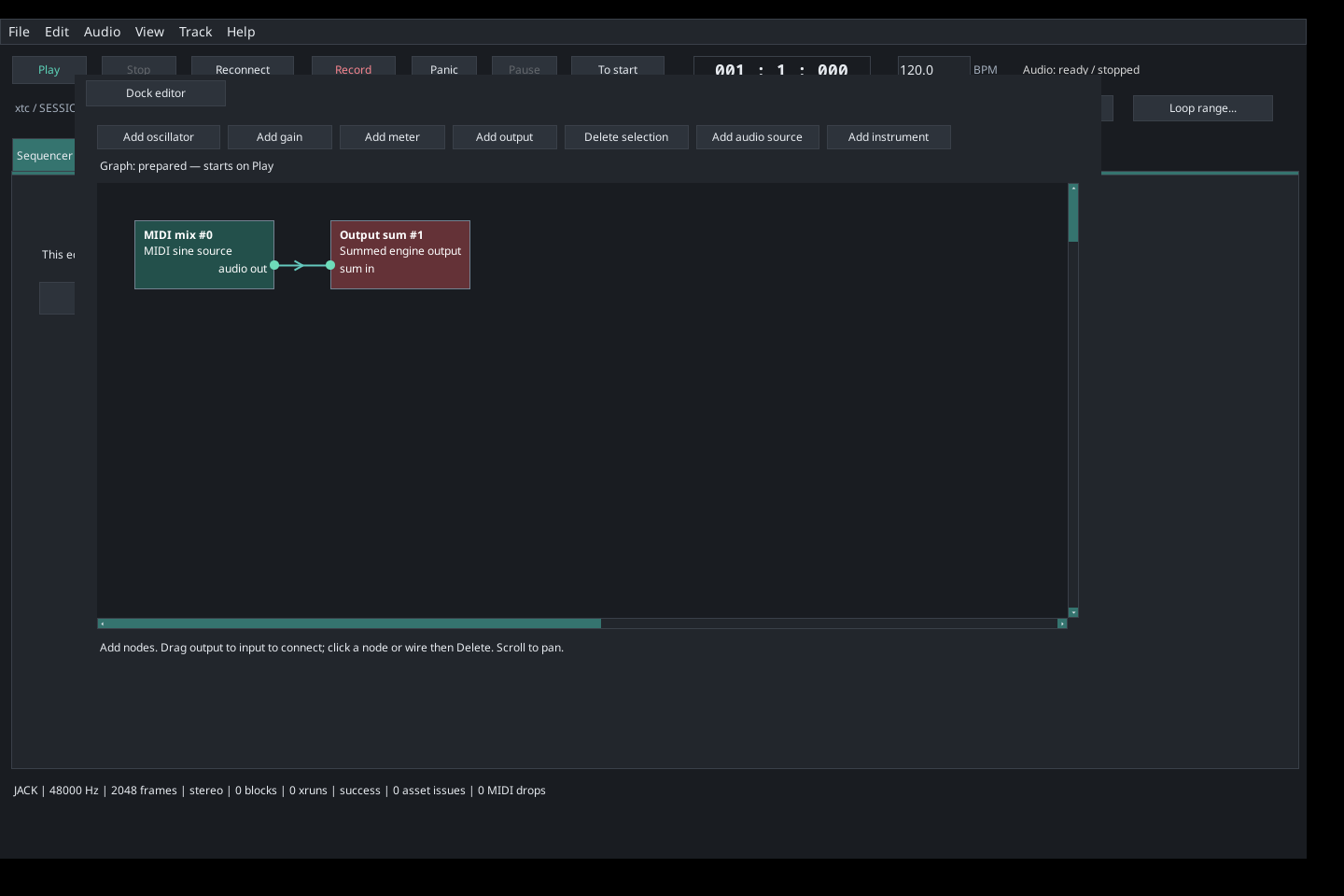
The modular graph is detached from the main workspace.
About xtc
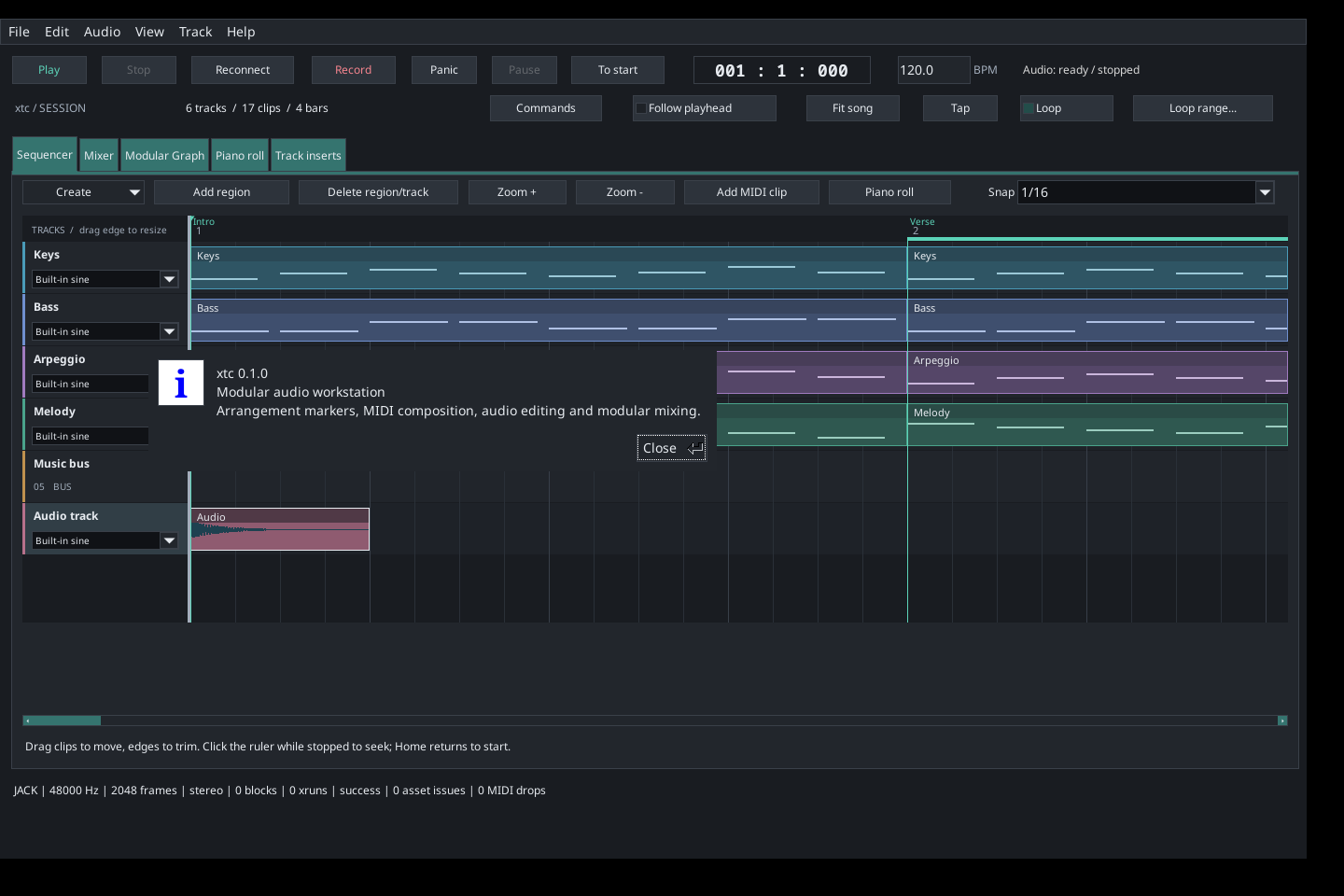
The About dialog presents application information.